The operational lifespan of a hole punch is dictated by the abrasive wear on its hollow cutting bits and the gradual loss of spring elasticity in its return mechanism. Most hardware failures occur when paper fibers and dust load build up within the internal slides, causing increased friction and eventual metal fatigue. While heavy-duty steel builds offer higher resistance to overload deformation, even the most robust desktop punches will suffer from joint loosening if the pivot points are not periodically cleared of debris. Navigating the trade-offs between manual leverage and mechanical complexity is essential for identifying a tool that can withstand thousands of repetitive cycles without producing ragged perforations. If you are looking for specific technical guidance, you can jump past the product listings to view our forensic research on maintenance and hardware longevity.
Hole punchers
Get organized and tackle your paperwork with ease using our reliable hole punchers
Product List
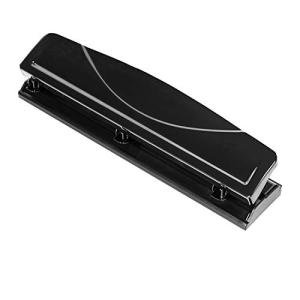
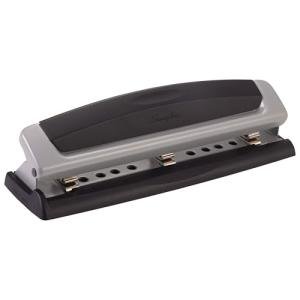
Adjustable 3-Hole Puncher
Swingline
Product Review Score
4.73 out of 5 stars
119 reviews$14.99 $13.52

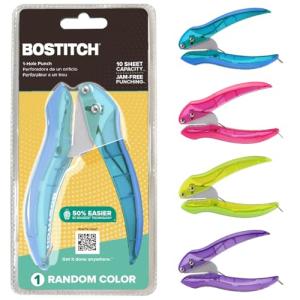

Bostitch EZ Squeeze Hole Punch
Paperpro
Product Review Score
4.3 out of 5 stars
90 reviews$14.70 $13.77
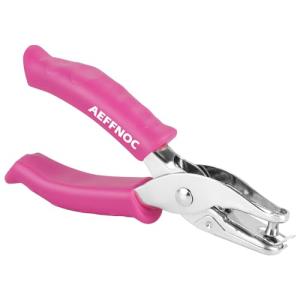
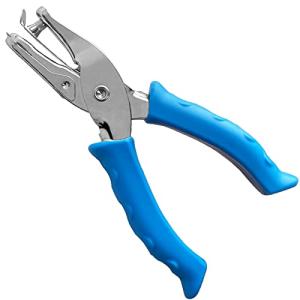
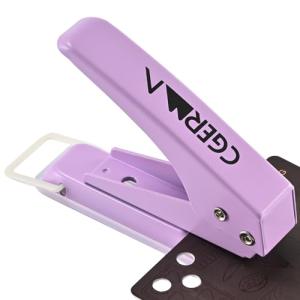
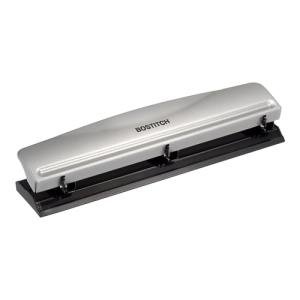
Bostitch 3-Hole Punch Silver
Bostitch
Product Review Score
4.79 out of 5 stars
76 reviews$11.99 $9.56
Maintenance & Troubleshooting
Preventing ragged hole edges requires regular lubrication of the punch heads with a dry graphite spray to reduce abrasive friction. Clearing the paper tray before it reaches 80% capacity is the single most effective way to avoid internal jams that lead to permanent lever deformation.
Common Failure Modes
Repeated mechanical use leads to specific wear patterns that can hinder the performance of your paper management tools.
- Repetitive use often results in cyclic fatigue failure; inspect the baseplate for hairline cracks and replace the unit if the frame begins to flex under normal pressure.
- Exceeding recommended sheet counts causes overload deformation; stick strictly to the manufacturer's capacity ratings to prevent the main lever from permanently bending.
- Hollow bits eventually experience abrasive wear; punch through aluminum foil periodically to help clean and slightly hone the cutting edges of the bits.
- Misaligned holes are frequently caused by joint loosening; check the pivot screws monthly and tighten them to ensure the punch heads travel in a perfectly vertical path.
- A handle that fails to pop back up indicates spring elasticity loss; replace the internal coil spring or apply a lightweight machine oil to the spring housing to reduce resistance.
- Dropping the tool can lead to an impact fracture; choose models with rubberized base bumpers to absorb shock and protect the cast iron integrity from accidental falls.
Environmental Stress Factors
The environment in which you store and use your office supplies significantly dictates their long-term reliability.
- High moisture levels lead to high humidity acceleration; use a silica gel packet in your desk drawer to prevent surface oxidation on the steel bits.
- Pivot points often succumb to dust load; use canned air to blow out paper particulate from the internal slides to maintain low-friction movement.
- Accidental chemical exposure can cause corrosion; if a cleaning agent touches the metal, wipe it immediately with a dry cloth and re-apply a protective lubricant layer.
Key Components
High-quality hole-punchers rely on a synergy of mechanical parts to deliver consistent, high-leverage performance.
- The structural housing acts as the primary chassis; ensure this component is made of heavy-gauge steel for high-volume archival work.
- Rotational movement depends on the hinge pivot assembly, which should be inspected for metal-on-metal grinding sounds.
- Handle recovery is driven by the spring elastic component; a thicker wire diameter in this spring generally correlates with a longer operational life.
- Alignment is maintained by the fastener system; these pins must be seated deeply to prevent the punch heads from drifting during a strike.
- Modern units often feature a polymer shell, which serves to protect internal metal parts from external impact and provide user comfort.
Related Categories
If you are researching document longevity and office tool durability, you may also find our forensic guides on these related categories helpful:
- Review the hardware failure expectations for binders & presentation sleeves to ensure your punched documents stay secure.
- Examine the mechanical reliability of high-volume staplers & staple removers for your mailroom or desk.
- Explore how to minimize dust accumulation by using mesh desktop organizers for tool storage.
- Efficiently manage paper waste and overflow with our research on small trash cans.