Maintenance & Troubleshooting
Extending the life of a deshedder requires post-use sterilization and the immediate removal of lipid buildup from the blade's surface to prevent chemical pitting. Regularly lubricating internal spring mechanisms in slicker brushes prevents the mechanical fatigue that leads to trigger failure and bristle jams.
Common Failure Modes
Mechanical stress and hygiene neglect can lead to several performance issues that compromise the tool's effectiveness and safety.
- Repeated friction against thick fur often leads to abrasive wear; use a specialized honing stone to occasionally realign the microscopic teeth of stainless steel blades.
- Excessive force during the removal of heavy mats can cause joint loosening; check and tighten the handle fasteners monthly to ensure the tool head remains stable.
- Internal springs in self-cleaning brushes may suffer from spring elasticity loss; avoid leaving the bristles in the "retracted" position during long-term storage to preserve spring tension.
- High-impact drops on hard floors can result in impact fracture; inspect the polymer frame for hairline cracks after any fall to ensure structural integrity hasn't been compromised.
- Frequent movement of hair-release triggers can lead to cyclic fatigue failure; apply a drop of mineral oil to the trigger pivot points to reduce internal plastic-on-plastic friction.
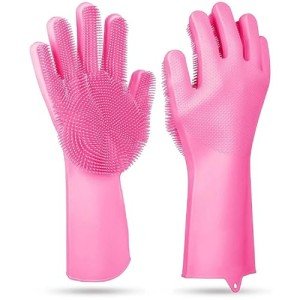
- Flexible silicone in grooming mitts may experience elastomer hardening; store gloves in a cool, dark drawer to keep the material supple and comfortable for the pet.
- In humid environments, small metal screws are susceptible to small hardware failure; apply a thin layer of protective wax to exposed screw heads to block moisture and prevent rust.
Environmental Stress Factors
The conditions where you store and use your grooming equipment significantly impact the longevity of the materials.
- Accumulated dander and fur trapped in mechanisms lead to pet hair clogging; use compressed air to blow out the internal tracks of self-cleaning brushes after every session.
- Storing tools in damp laundry rooms or bathrooms often causes high humidity acceleration; place a desiccant pack in your grooming kit to absorb excess moisture and protect metal pins.
- Fine particles in professional salons contribute to dust load; wipe down the exterior of motorized brushes with a damp cloth to prevent particulates from migrating into the motor housing.
- Leaving grooming gloves on sunny windowsills results in high UV exposure; use UV-opaque storage containers to prevent the chemical breakdown of the rubberized grip.
Key Components
High-quality grooming tools are engineered with specific materials to balance ergonomic comfort with heavy-duty performance.
- The primary polymer shell provides the chassis; choose high-impact ABS plastics to ensure the tool can survive accidental drops on tile or concrete.
- Ergonomic handles are often secured via a robust fastener system; verify that screws are countersunk to prevent them from catching on your hand or the pet's fur.
- Professional blades rely on a load bearing frame; this ensures that the pressure you apply is distributed across the entire comb width rather than a single stress point.
- Self-cleaning models utilize a specialized sliding rail; keep the tracks clear of debris to ensure the hair plate ejects smoothly without binding.
- Comfort-grip sections often feature an adhesive bond layer; check for "bubbling" in the rubber overmold, which indicates a failure of the internal bonding agent.
- The protective caps on pin brushes serve as a container packaging system; always replace these guards after use to maintain the alignment of the fine metal teeth.
If you are researching full-home hair management and pet maintenance, you may also want to review the failure expectations for these related devices: