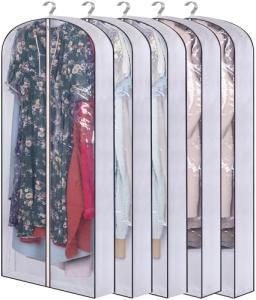
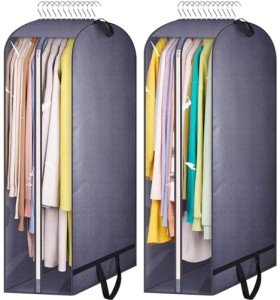
Maintenance & Troubleshooting
To prevent zipper seizing, run a graphite pencil or specialized dry lubricant along the sliding track twice a year to clear micro-debris. Periodically inspecting the hanger exit seal ensures that the internal micro-climate remains hostile to pests and dust accumulation.
Common Failure Modes
Even high-quality storage solutions can succumb to wear over time if not handled with care or inspected regularly.
- To prevent stitch failure, avoid hanging more than one heavy garment per bag to reduce the vertical tension on shoulder seams.
- Address small hardware failure by pulling zippers parallel to the track rather than outward, which prevents the slider from bending.
- Stop textile fiber thinning by choosing bags with side gussets that provide enough volume to prevent the fabric from stretching over the garment.
- Reduce sliding track wear by using a soft brush to clear dust from the zipper teeth before each seasonal opening.
- Avoid structural warping by hanging bags with at least an inch of clearance on either side to maintain the intended silhouette.
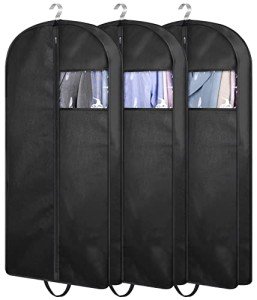
- Minimize surface scratching on viewing windows by cleaning only with soft microfiber cloths and avoiding contact with abrasive metal hangers.
- Mitigate cyclic fatigue failure by supporting the base of the bag with your hand while transporting it to relieve stress on the handles.
Environmental Stress Factors
The atmosphere inside your home plays a critical role in the longevity of both the storage bag and the garment inside.
- Counteract high humidity by placing silica desiccant packets inside the bag to absorb moisture trapped during the sealing process.
- Limit high UV exposure by using opaque canvas bags rather than clear plastic if your closet receives direct sunlight.
- Manage dust load by wiping the top "shoulders" of the bag every few months to prevent grit from sifting through the hanger opening.
- Block pest intrusion by ensuring the zipper is fully closed and the hanger exit is snug; even a 3mm gap is enough for larvae to enter.
Key Components
The engineering of a garment bag involves several specialized parts that work together to provide a protective barrier.
- The upholstery fabric should be a high-denier breathable material that filters particles while allowing gases to escape.
- Check the load bearing frame for rigidity; a sturdy internal wire or plastic top prevents the bag from sagging onto the garment’s shoulders.
- A reliable fastener system should feature a locking slider that stays in place to maintain a consistent environmental seal.
- The polymer shell on travel models must be thick enough to resist punctures from transit equipment or other luggage.
- The hinge pivot assembly at the top should be reinforced with a metal or plastic grommet to prevent the hanger hook from tearing through.
- Specialized bags with a seal gasket require regular inspection to ensure the rubber or foam hasn't embrittled and lost its compression.
If you are researching a complete wardrobe preservation strategy, you may also want to review the failure expectations for these related storage systems: