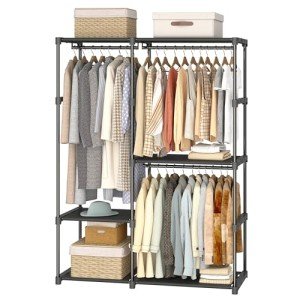
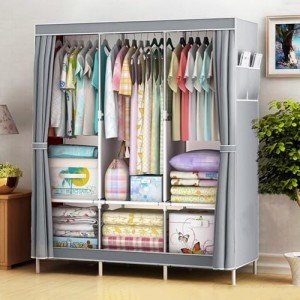
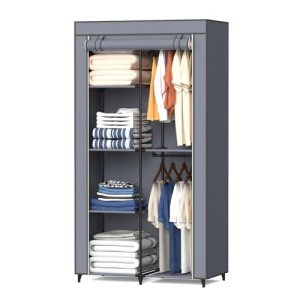
Maintenance & Troubleshooting
To prevent structural bowing, you must check that every steel rod is fully seated within its plastic connector at least twice a year. Applying a dry lubricant to the zippers monthly will stop the stitch failure caused by excessive horizontal tension during daily use.
Common Failure Modes
Fabric wardrobes are susceptible to specific mechanical stresses that can compromise their stability and the safety of your stored items.
- Repeated assembly and heavy movement can lead to significant joint loosening; ensure all rods are firmly hammered into their sockets with a rubber mallet to restore vertical alignment.
- Exceeding the manufacturer's weight limit often results in overload deformation; place heavier items like boots on the lowest shelf to keep the center of gravity low and prevent rod snapping.
- Overstuffing the hanging sections puts immense pressure on the seams, frequently leading to stitch failure; maintain a two-inch gap between the garments and the zipper to relieve lateral stress.
- The internal shelving inserts may experience structural warping; use rigid plastic or cardboard liners over the fabric platforms to distribute the weight of storage bins evenly.
- Plastic connectors used in the frame are prone to impact fracture; keep the wardrobe away from high-traffic doorways where accidental bumps can shatter brittle polymer joints.
- Zippers that are forced shut over bulky winter coats often suffer from small hardware failure; use a vacuum-sealed bag for bulky items to reduce volume before attempting to close the cover.
Environmental Stress Factors
The placement of your fabric wardrobe significantly dictates how well the materials age and how well your clothing is protected.
- Placing your unit in a basement or laundry area risks high humidity acceleration; place a moisture-absorbing desiccant inside the closet to prevent fiber weakening and mildew.
- If positioned near a sunny window, the outer shell is highly vulnerable to high UV exposure; use a secondary UV-blocking window film or move the unit into a shaded corner to prevent fabric brittleness.
- In homes with animals, you must monitor for pet hair clogging; vacuum the bottom zipper tracks weekly to prevent hair from jamming the slider and tearing the fabric.
- Units stored in garages or attics must be checked regularly for pest intrusion; ensure the bottom of the cover is taped or weighted against the floor to seal off entry points for insects and rodents.
Key Components
Each part of the freestanding closet is engineered to balance lightweight portability with the strength required for garment organization.
- The core of the unit relies on a load bearing frame, which serves as the skeleton; look for powder-coated steel to resist rust in humid climates.
- Protection from the elements is provided by the upholstery fabric layer, acting as a filter to keep dust off delicate silks and wools.
- The stability of the outer shell is maintained by the structural housing, which provides the necessary tension to keep the frame from swaying.
- Each shelf and hanging rod is secured using a specific fastener system that locks the horizontal supports into the vertical uprights.
- The outer cover is manufactured from a durable polymer shell material, typically non-woven polypropylene, which allows for air circulation while repelling liquid spills.
Related Categories
If you are researching full-room setups, you may also want to review the failure expectations for these related devices:
- For long-term storage of bulky linens, vacuum storage bags help maximize the limited weight capacity of fabric wardrobes.
- If you are transitioning to a more permanent bedroom setup, review the durability of modular closet system kits.
- To defend high-value formal wear within a temporary closet, use dedicated garment bags for an extra layer of protection.
- For those needing to manage a large footwear collection, a rolling shoe cart offers high-capacity mobility alongside your wardrobe.