Maintenance & Troubleshooting
To prevent irreversible wheel seizures, use a compressed air canister to clear debris from the bearing system every three months. Regularly re-torquing the fastener system ensures that the vibrations of transit don't lead to the joint loosening that causes frame racking.
Common Failure Modes
Mobile storage units face unique mechanical stresses during transit and stationary loading that can lead to structural instability over time.
- To combat Cyclic Fatigue, avoid rapid changes in direction when the cart is at full capacity to reduce lateral torque on the metal joints.
- Prevent Overload Deformation by placing heavier boots on the bottom tier to maintain a low center of gravity and keep wire shelves from bowing.
- Address Bearing Wear by applying a dry silicone lubricant to the wheel axles if you notice increased resistance or squeaking during movement.
- Stop Joint Loosening by installing spring washers or using thread-locking fluid on the main assembly bolts to maintain a rigid frame.
- Fix Small Hardware Failure by replacing generic plastic shelf clips with metal aftermarket versions for a more secure, permanent grip.
- Avoid Structural Warping by ensuring the cart is stored on a level surface; a constant tilt will eventually twist the vertical support bars.
Environmental Stress Factors
The longevity of your rolling cart depends heavily on the atmospheric conditions of the room where it is stored.
- In areas of High Humidity, treat chrome-finished components with a light coat of car wax to create a barrier against oxidation and surface rust.
- Eliminate Pet Hair Clogging by using a seam ripper or tweezers to clear the wheel housing, preventing the hair from wrapping tightly around the axle.
- Manage the Dust Load by wiping down the shelving monthly to prevent grit from settling into the swivel mounts and acting as an abrasive.
- Prevent Corrosion by immediately drying any moisture from wet shoes that drips onto the cart's frame, especially in areas where road salt is used.
Key Components
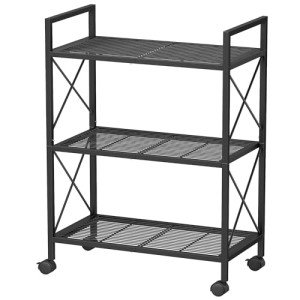
The reliability of a mobile shoe cart is defined by the quality and integration of its primary structural and mechanical parts.
- The Load Bearing Frame should be constructed from thick-gauge steel tubing to resist the twisting forces encountered when crossing door thresholds.
- A high-quality Rotational Drive Assembly must include 360-degree swivel casters on at least two corners for precise navigation in tight closets.
- The Fastener System acts as the primary connective tissue; look for locking nuts that won't back out under the constant vibration of movement.
- The Structural Housing should include reinforced corners to protect both the cart and your walls from accidental impacts during transit.
- A shielded Bearing System within the wheels is critical for long-term mobility, as it prevents debris from entering the internal rotational mechanics.
Related Categories
If you are researching full-room setups, you may also want to review the failure expectations for these related devices: