Maintenance & Troubleshooting
Regularly checking the torque on wall anchors prevents the micro-shifts that lead to permanent wall damage and unit sagging. For long-term stability, verify that the console remains level every six months, as settling building materials can unevenly distribute weight across the mounting hardware.
Common Failure Modes
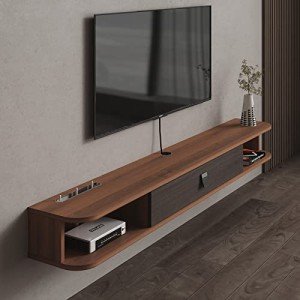
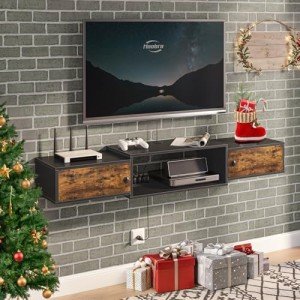
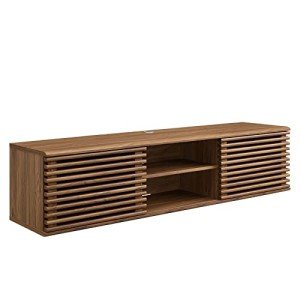
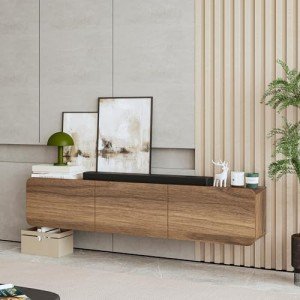
While engineered for durability, floating consoles can experience specific mechanical issues over time due to weight and usage patterns.
- Mitigate Cyclic Fatigue by reinforcing internal brackets with steel L-plates if you notice even slight movement when interacting with the unit.
- Prevent Structural Warping by placing heavy amplifiers or gaming consoles directly over the wall studs rather than in the center of unsupported spans.
- Address Hinge Fatigue by applying a dry-film lubricant to moving parts and re-adjusting the alignment screws at the first sign of door drooping.
- Avoid Overload Deformation by adhering strictly to the manufacturer's maximum weight rating, typically distributed as a static load across the main shelf.
- Fix Joint Loosening immediately by replacing standard plastic wall plugs with heavy-duty toggle bolts or expansion anchors if the unit pulls away from the wall.
- Combat Coating Peeling in high-moisture rooms by sealing any exposed edges with a matching edge-banding tape to prevent internal swelling.
- Reduce the risk of Impact Fracture by installing soft-close dampeners on all doors to prevent high-velocity collisions with the main frame.
Environmental Stress Factors
The atmosphere of your home plays a critical role in the long-term stability of wall-mounted media storage solutions.
- Control High Humidity by using a dehumidifier in the media room to prevent the expansion of fiberboard cores which can loosen structural fasteners.
- Shield against High UV Exposure by applying a UV-resistant wax or positioning the unit out of direct afternoon sun to prevent the finish from becoming brittle.
- Manage the Dust Load by using an anti-static brush on rear ventilation ports to ensure housed electronics don't suffer from thermal throttling.
- Prevent Cleaner Compatibility Conflict by using only pH-neutral microfiber cloths; avoid ammonia-based sprays that can dissolve the adhesives in surface laminates.
Key Components
Every floating console relies on several precision-engineered parts to maintain its "weightless" appearance and functionality.
- The Load Bearing Frame must be constructed from high-tensile materials to prevent the unit from "racking" or twisting under its own weight.
- A high-quality Sliding Rail is essential for any drawers to ensure the motion remains fluid even when the console is under full vertical tension.
- The Fastener System is the most critical safety component; look for steel French cleats or heavy-duty lag bolts for secure wall integration.
- The Structural Housing provides the torsional rigidity needed to keep the unit square, preventing cabinet doors from binding over time.
- An integrated Glass Panel should be tempered for safety and checked for secure bonding to the frame to prevent rattling during high-volume audio playback.
If you are researching full-room setups, you may also want to review the failure expectations for these related devices: