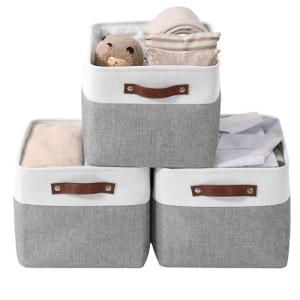
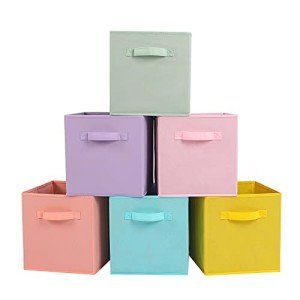
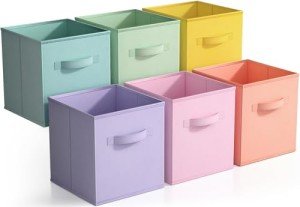
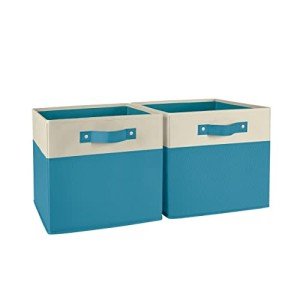
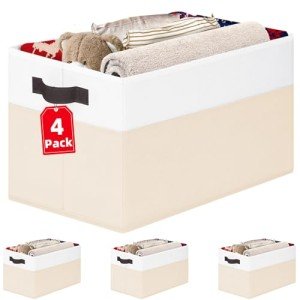
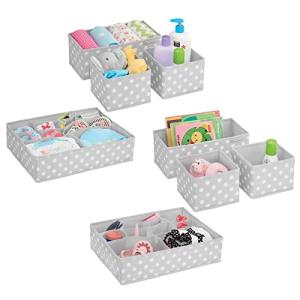
Maintenance & Troubleshooting
Checking the integrity of the internal support panels before each seasonal rotation prevents permanent deformation. If you notice a softening of the vertical walls, inserting a custom-cut plastic sheet can often restore structural rigidity and extend the unit's lifecycle.
Common Failure Modes
Even the most durable fabric organizers face physical limitations when subjected to repetitive mechanical stress or excessive weight loads.
- Repeated overstuffing of soft-sided containers often leads to stitch failure; avoid exceeding the volume capacity to prevent the seams from unraveling.
- Heavy items placed at the bottom of a stack can cause structural warping; place the heaviest bins at the lowest point of your shelving to preserve internal panel alignment.
- Frequent sliding on rough wooden shelving can cause textile fiber thinning; apply felt pads to the base of the bin to reduce friction and prevent holes.
- In cheaper models, the loss of vertical rigidity is often a result of overload deformation; reinforce the interior with a rigid insert if the bin begins to lose its square shape.
- Bins that use low-quality adhesive to bond fabric to internal panels may suffer from delamination; keep bins away from heat sources like radiators to prevent glue breakdown.
- The handles are particularly susceptible to cyclic fatigue failure; always use two hands to lift a loaded bin rather than pulling sharply on a single handle.
Environmental Stress Factors
The organic and synthetic fibers used in closet bins are highly reactive to the climate and cleanliness of your storage environment.
- Storing bins in unconditioned attics or basements often leads to high humidity acceleration; use silica gel packets inside the bins to absorb moisture and protect fiber strength.
- Closets located near windows may experience fiber breakdown and color loss due to high UV exposure; rotate the bins' positions regularly to ensure even wear and prevent localized fabric rot.
- In poorly ventilated corners, the accumulation of organic particles can lead to mold growth; ensure at least two inches of airflow between the bin and the wall to prevent fungal colonization.
- Open-top fabric bins are magnets for dust load; use a handheld vacuum with a brush attachment monthly to remove abrasive particles from the weave.
Key Components
High-performance fabric bins rely on a combination of hidden structural elements and specialized outer layers to maintain their utility.
- The rigid shape is maintained by a load bearing frame, typically made of heavy-duty paperboard or lightweight polypropylene sheets.
- The visible exterior is the upholstery fabric layer, which provides the color, texture, and primary barrier against external contaminants.
- Many bins feature a structural housing design that allows them to collapse flat when not in use without sacrificing vertical strength.
- The base of the bin often includes an insulation system or reinforced pad to protect contents from the cold or damp surfaces of floor storage.
- To keep the fabric taut and bonded to the frame, manufacturers use a high-strength adhesive bond layer that must resist peeling over time.
Related Categories
If you are researching full-room setups, you may also want to review the failure expectations for these related devices: