Maintenance & Troubleshooting
To prevent the telescopic sections from seizing, wipe down the inner shafts with a dry cloth after every use to remove abrasive particulates before retraction. Periodically tightening the pivot joint screws with a precision driver can stop the cleaning head from flopping during heavy-duty overhead tasks.
Common Failure Modes
Daily use of telescopic cleaning tools can lead to mechanical fatigue and material degradation if not properly maintained.
- Prevent sliding track wear by avoiding over-extension past the "stop" mark, which maintains the structural overlap needed for a secure lock.
- Address joint loosening by inspecting the tension washers at the duster's neck and replacing worn rubber gaskets that provide the necessary friction.
- Avoid stress cracking by turning locking collars only until snug; excessive torque leads to hairline fractures in the plastic polymer housing.
- Slow down textile fiber thinning by air-drying duster heads instead of using high-heat cycles, which makes synthetic fibers brittle and less effective at trapping dust.
- Minimize overload deformation by storing the pole vertically in a dedicated clip rather than leaning it where heavy equipment can apply pressure to the aluminum.
- Stop abrasive wear by using a can of compressed air to blow out the internal sleeves, preventing grit from scratching the telescoping finish.
Environmental Stress Factors
The environment in which you store and use your duster significantly impacts the longevity of its specialized materials.
- Reduce the dust load within the mechanism by storing the duster in a protective sleeve or closed closet to keep particulates out of the sliding joints.
- Prevent polymer softening by keeping the tool out of uninsulated attics where high temperatures can warp the handle and locking tabs.
- Avoid a cleaner compatibility conflict by only using mild, pH-neutral soaps for washing, as harsh solvents can strip the electrostatic charge from the fibers.
- Manage pet hair clogging by using a comb to clear the duster head before washing, preventing hair from winding into the telescopic threads and seizing the pole.
Key Components
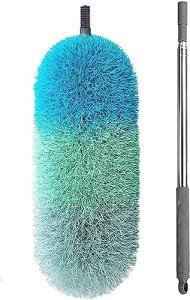
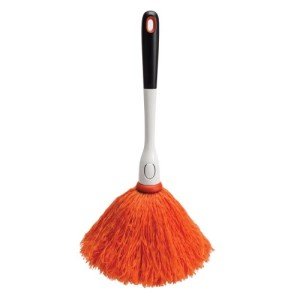
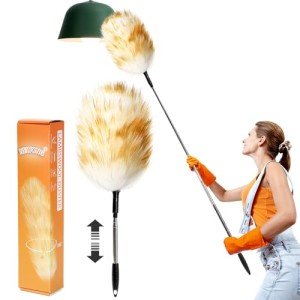
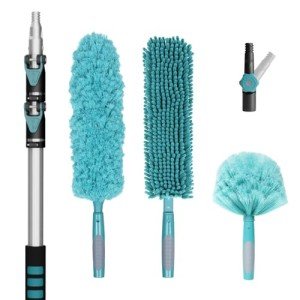
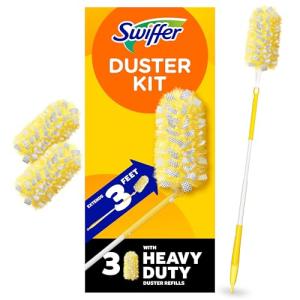
The efficiency of an extendable duster relies on the synergy between its reach-extending frame and its debris-capturing interface.
- The load bearing frame should be constructed of anodized aluminum to provide a high strength-to-weight ratio for overhead stability.
- In high-end models, a specialized surfactant system treatment on the fibers enhances the van der Waals forces required to hold dust against gravity.
- The polymer shell of the handle must be impact-resistant to protect the internal telescoping locks from drop damage.
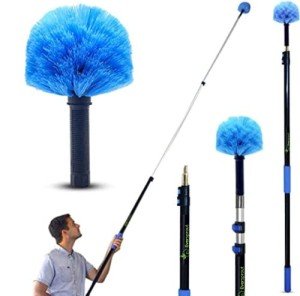
- A reliable fastener system typically utilizes a universal ACME thread or a push-button click-lock to prevent the head from spinning during use.
- The spring elastic component inside the locking tabs provides the tension needed to keep the pole from collapsing under the weight of the cleaning head.
Related Categories
If you are researching high-reach cleaning solutions or surface maintenance, you may also find relevant technical data in these categories: