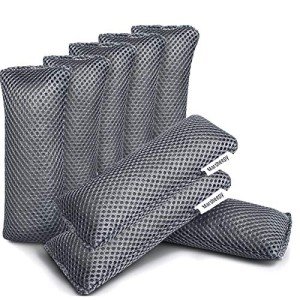
Maintenance & Troubleshooting
Maximizing charcoal longevity requires monthly UV-reactivation to "bake out" trapped volatile organic compounds and moisture. Failure to perform this thermal reset results in permanent saturation, where the bag begins to re-release odors back into the surrounding air.
Common Failure Modes
Even the most durable natural filters can experience performance declines if the carbon structure becomes compromised or fully saturated.
- When the internal bamboo charcoal reaches its maximum capacity, active oxidation can occur; reactivate the bag in direct sunlight for at least two hours to clear the pores.
- Exposure to liquid water rather than vapor can lead to hydrolysis breakdown; keep bags away from leaky pipes or windowsills where condensation pools.
- The natural scent-trapping capabilities suffer from fragrance degradation; avoid placing bags directly next to plug-in synthetic air fresheners that overwhelm the carbon lattice.
- Over time, the outer fabric may experience textile fiber thinning; inspect the weave regularly and patch small holes to prevent messy charcoal dust leakage.
- If the bag is kept in stagnant, wet air, mold growth may develop; ensure adequate airflow around the bag so the outer linen can dry properly.
- The shifting of internal contents during frequent transport can cause abrasive wear; minimize aggressive shaking or dropping to prevent the charcoal from pulverizing into fine dust.
Environmental Stress Factors
External conditions play a critical role in how quickly the activated charcoal becomes saturated and needs to be refreshed.
- Sustained exposure to high humidity acceleration forces the bag to prioritize water vapor; increase the frequency of sunlight "recharging" to twice a month in damp basements.
- In garage or workshop settings, a heavy dust load can clog the fabric; vacuum the exterior of the bag occasionally to maintain the necessary airflow to the core.
- Standard indoor air pollution exposure from cooking oils can coat the charcoal; keep bags away from kitchen grease vents to prevent the carbon surface from becoming sealed.
Key Components
The efficacy of a deodorizer bag relies on the synergy between its high-surface-area core and its breathable protective housing.
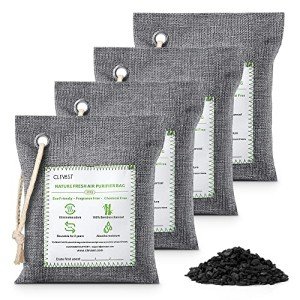
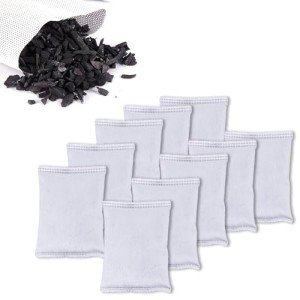
- The primary active ingredient consists of kiln-fired bamboo charcoal; check for a high density-to-volume ratio to ensure a higher volume of microscopic pores.
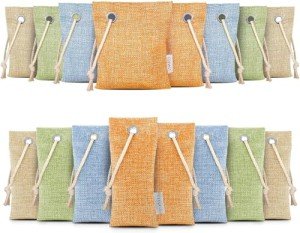
- The outer linen or burlap acts as a container packaging system; look for natural, unlined fibers that offer the least resistance to gas exchange.
- The carrier base ensures the charcoal remains evenly distributed; periodically massage the bag to break up clumps and expose fresh charcoal surfaces.
- High-quality stitching serves as a critical fastener system; prioritize double-stitched reinforced seams if you plan to use the bags in gym lockers or shoes.
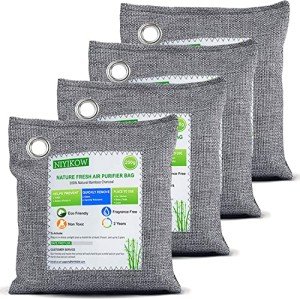
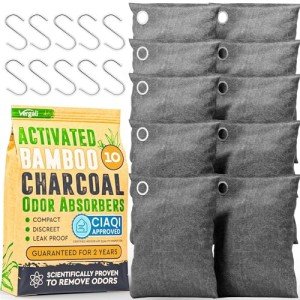
- Integrated metal grommets function as a structural housing feature; use these to hang the bag vertically to maximize the surface area exposed to ambient air.
If you are researching full-room air remediation or specialized odor control, you may also want to review the failure expectations for these related devices:
- To target deep-set smells in rugs and upholstery, consider using carpet and fabric odor removers for deep-fiber penetration.
- For active odor neutralization in large rooms, HEPA air purifiers provide the mechanical filtration needed to capture airborne particulates.
- Maintain a pleasant atmosphere in smaller spaces by pairing your charcoal bags with oil diffusers and essential oil sets for controlled fragrance release.
- Ensure your clothes remain fresh during seasonal storage by placing deodorizers inside garment bags to maintain a dry, neutral micro-climate.