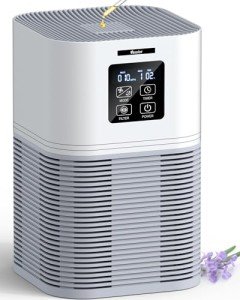
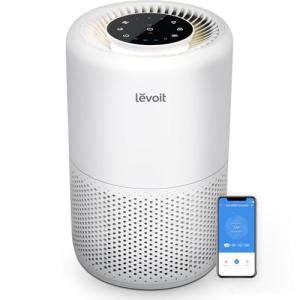
Maintenance & Troubleshooting
Proper maintenance of an air purifier requires more than just filter swaps; you must periodically vacuum the internal sensor intake to prevent particle-driven "logic drift." Ensuring the intake grilles remain free of physical obstructions is the single most effective way to prevent the motor-winding over-heating that leads to total system failure.
Common Failure Modes
Mechanical and electrical fatigue can compromise the efficiency of your air purification system over several years of continuous operation.
- Restricted intake and motor strain often occur due to airflow restriction stress; clean or replace pre-filters every 30 days to reduce back-pressure on the fan motor.
- Internal electronics may become unresponsive or fail prematurely because of PCB overheating; ensure the unit is placed at least 12 inches from walls to allow heat dissipation from the control housing.
- Automated air quality readings can become inaccurate over time due to sensor drift; use a can of compressed air to clear the laser or infrared sensor lens every six months.
- The mechanical components of the fan may suffer from bearing wear rotational friction; if you hear a high-pitched whine, check for fan blade imbalances that accelerate axle wear.
- Electrical safety and efficiency are compromised when long-term usage leads to insulation breakdown; inspect the power cord for fraying and avoid using high-wattage purifiers on low-gauge extension cords.
- Responsive controls may eventually fail to register inputs as a result of switch contact wear; avoid aggressive pressing of touch-panels to prevent cracking the underlying membrane circuit.
Environmental Stress Factors
The specific conditions of your home environment directly impact how frequently your filters and internal components require attention.
- Filter longevity is significantly reduced in homes with animals due to pet hair clogging; use a vacuum with a brush attachment on the external grilles weekly to stop hair from reaching the primary HEPA stage.
- Internal cooling and filtration efficiency are often hindered by dust load; wipe down the intake grilles with a microfiber cloth to prevent "dust bridges" from forming between the vents.
- High-moisture environments can lead to filter degradation through high humidity acceleration; never operate a purifier in a room with a humidifier running at full capacity, as damp fibers can trigger mold growth.
- In urban areas, the concentration of particulate matter leads to air pollution exposure; set your device to "Auto" mode to allow the motor to throttle down during low-pollution windows and extend fiber life.
Key Components
Modern purifiers rely on a synergy of high-speed mechanical parts and sensitive electronic monitoring tools.
- The primary movement of air through the dense HEPA media is managed by a high-performance motor assembly, the most expensive hardware component to replace.
- Automated fan speeds and air quality indicators are governed by a sophisticated sensor system, which requires regular calibration to remain accurate.
- The unit maintains structural integrity and contains noise through its durable structural housing, which also acts as an acoustic baffle for the fan.
- The distribution of purified air throughout the room depends on a clear airflow ventilation path, usually requiring an unobstructed "bubble" of space around the unit.
- Connectivity and smart features are enabled by how electronic control boards manage smart functions, including Wi-Fi modules that are sensitive to power surges.
Related Categories
If you are researching full-room air quality and appliance longevity, you may also want to review the maintenance expectations for these related home systems: