Maintenance & Troubleshooting
Regularly re-torquing the assembly screws every six months prevents the "racking" effect that leads to permanent frame deformation. Keeping the lower tiers free of salt and moisture prevents the chemical degradation of the base finish, ensuring the unit remains structurally sound.
Common Failure Modes
Even the sturdiest organizational furniture can succumb to physical stresses over time, leading to reduced stability or hardware issues.
- Repeated loading and unloading of heavy boots can eventually lead to cyclic fatigue failure within the rack's primary support joints; inspect the connection points for hairline fractures or metal thinning annually.
- Leaving excessive weight on a single shelf for months can cause permanent creep deformation in wooden or plastic shelving; rotate your heaviest shoes to different tiers every few weeks to redistribute the static load.
- Movement of the rack across rough flooring may result in abrasive wear on the protective feet; apply adhesive felt pads to the base to protect both the floor and the rack's structural caps.
- Structural integrity is often compromised by joint loosening caused by natural material shifts; use a drop of thread-locking fluid on screws during assembly to prevent them from backing out over time.
- Over-tightening or uneven weight distribution might lead to a sudden impact fracture in brittle components; always hand-tighten fasteners rather than using power tools to avoid overstressing the material.
- Misaligned assembly frequently results in structural warping; use a carpenter's square during initial setup to ensure the frame is perfectly perpendicular before final tightening.
- Exceeding the manufacturer's weight limit typically triggers overload deformation; place heavier work boots on the bottom tier and lighter sneakers on top to maintain a low center of gravity.
- Missing or stripped screws are a common form of small hardware failure; replace any damaged screws immediately with high-tensile steel alternatives to maintain frame rigidity.
Environmental Stress Factors
The placement of your shoe rack significantly impacts its longevity, especially when exposed to moisture or sunlight.
- Placing metal racks in damp mudrooms can lead to high humidity acceleration; prioritize racks with powder-coated or galvanized finishes to resist the onset of surface rust.
- Racks positioned near entryway windows face high UV exposure; use a UV-resistant sealant on wooden racks or choose opaque plastic models to prevent material brittleness.
- In many households, dust load accumulates on the lower tiers; wipe down the frame once a month with a damp cloth to prevent grit from scratching the protective surface coating.
- For pet owners, pet hair clogging around the fasteners can trap moisture; use a vacuum attachment to clear the base and joints to prevent hidden corrosion.
Key Components
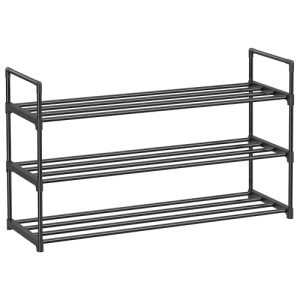
Each part of a 3-tier rack plays a vital role in ensuring your footwear remains organized and the unit stays upright.
- The foundation of the unit is the load bearing frame which acts as the skeleton that prevents the tiers from swaying under weight.
- Stability is maintained by a robust fastener system, the critical hardware that keeps the horizontal shelves securely bonded to the vertical uprights.
- The outer layers often feature a polymer shell or waterproof sealant to act as a barrier against wet soles and road salt.
- A high-quality structural housing design ensures that even if one tier fails, the remaining levels do not collapse as a result of shared stress.
- To protect your floors, many racks include a specialized surface coating or rubberized feet that dampen vibrations and prevent lateral sliding.
Related Categories
If you are researching full-room setups, you may also want to review the failure expectations for these related devices:
- If you have tall footwear, a dedicated boot storage rack provides the specific clearance that standard tiers lack.
- For those with limited floor space, stackable closet shoe cubbies offer a customizable way to build vertical storage.
- Protect your premium leather shoes from dust by utilizing drop front shoe boxes within a closet system.
- To keep your hallway entrance clean from mud and snow, consider pairing your rack with boot trays.