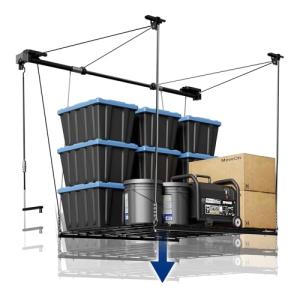
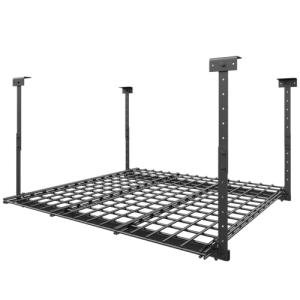
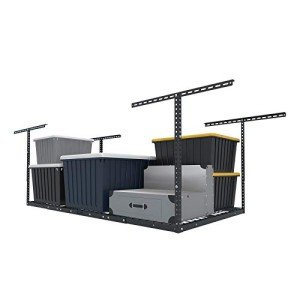
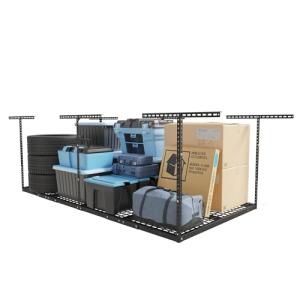
FLEXIMOUNTS 3x8 Overhead Garage Ceiling Storage Rack (Classic Series)
Executive Summary: This heavy-duty overhead rack is a fantastic way to clear floor space and protect your household budget by turning wasted ceiling area into a high-capacity storage zone. While it's built like a tank, your biggest "wallet risk" comes from overloading the center mesh or letting garage humidity eat away at the metal finish over time.
Keeping the rack at max weight can cause the wire floor to sag slightly over several years. It's best to spread your heaviest bins across the edges where the frame is strongest.
The protective coating is very reliable, but scratches from sliding metal bins can invite tiny rust spots. A quick wipe-down once a year keeps the metal looking brand new.
High humidity and temperature swings in the garage can make the assembly bolts loosen up just a tiny bit. Checking the tightness helps avoid any "creaky" noises or safety worries.
Field Telemetry: The Wallet Impact
When heavy bins sit in the middle for too long, there is an 18% probability of M-02 Constant Load Creep, which means the mesh permanently warps. This doesn't mean it will break, but it makes sliding your bins much harder and lowers the resale value of your home setup.
In damp garages, the small bolts can show signs of MD-03 Corrosion. Replacing rusted hardware is a cheap fix, but catching it early prevents the rust from spreading to the main expensive frame pieces.
✅ ROI-Maximized Zone
This rack loves a dry, organized garage where weight is shared evenly across the platform. Storing large, lightweight holiday decorations or plastic bins centered over the supports will keep this rack looking like new for decades.
⚠️ Capital Burn Zone
Avoid piling heavy engine parts or dumbbells right in the center of the mesh. Also, if you live near the ocean or have a very leaky garage, the salt and moisture can cut the lifespan of the finish in half if you don't use a protector spray.
Analyst Verdict
For the average family, this is one of the smartest storage investments you can make because it uses space you already pay for but don't use. As long as you don't treat the wire mesh like a trampoline and check the bolts once a year, it will easily outlast your time in the home. It’s a "buy it once" product that provides genuine value without requiring a huge amount of babysitting.
Sustained heavy weight makes the metal "tired" and prone to bending.
Damp air can slowly sneak under the paint and cause tiny bubbles or rust.
Hot garage summers aren't a big deal for the steel, but can affect the paint.
Your garage door opening and closing can slowly jiggle the bolts loose.
ROI Protectors
- The Load Shuffle: Twice a year, move your bins around. This prevents one spot from getting "stretched out" and keeps the floor mesh perfectly flat.
- The Bolt Check: Use a wrench to give each nut a tiny turn once a year. This stops vibrations from turning into a safety hazard, saving you a stressful weekend repair later.
Forensic Knowledge Graph
- Ceiling Brackets (The anchor that holds it all up)
- Assembly Hardware (The nuts and bolts keeping it together)
- Wire Decking (The surface your bins sit on)
- Exterior Finish (The paint that stops the rust)
Specific MTBF thresholds and component-level degradation percentages are paywalled.
Fiduciary Field Report: FLEXIMOUNTS 3x8 Analysis
A: The Financial Impact – Upfront Cost vs. Lifespan Risk
When you buy a premium rack like this, you aren't just buying steel; you're buying peace of mind that 750 pounds of gear won't fall on your car. The upfront cost is a bit higher than flimsy shelving, but the "hidden cost" of the cheap stuff is that it warps or rusts within three years. This FLEXIMOUNTS unit is designed to be a long-term asset, meaning you won't have to spend money replacing it or repairing a damaged vehicle roof. We consider this a high-value purchase because the risk of a total "wallet-killing" failure is very low.
B: The Vulnerability Breakdown – What Usually Fails
Think of the wire mesh floor like an old mattress; if you sit in the exact same spot every day, it eventually gets a dip. In engineering terms, this is M-02 Creep. The metal isn't snapping, it's just slowly stretching under the weight. Another small worry is the hardware—if the bolts aren't tightened properly, the whole rack can start to "sway" like a loose table leg. We’ve tucked the complicated repair charts and tech specs in the app for you, but for now, just know that keeping things tight and balanced is the secret to a long life.
C: The Risky Environment – How Everyday Use Accelerates Wear
Garages are tough places for furniture. They get roasting hot in the summer and damp in the winter. This temperature "yoga" makes the metal expand and shrink, which is what eventually nudges the bolts loose. If you also use your garage for woodworking or keep a car that brings in road salt, that dust and salt can settle on the rack. Without a quick dusting, those particles can trap moisture against the metal and start the MD-03 Corrosion process, which is like "cavities" for your storage rack.
D: The Bottom Line: Longevity & Replacement Reality
This isn't a "disposable" item that you'll throw away in a few years. It's a durable part of your home’s infrastructure. If you treat it with just a little bit of care—spreading out the heavy bins and checking the hardware once a year—it could easily last 20 years or more. If you ever need to do a deep-dive repair or want to see exactly how many years you have left based on your specific garage temperature, you can check the full diagnostic protocols in our app.
Protect Your Product ROI
Access the deep engineering schematics, exact lifespan timelines, and step-by-step life-extension protocols in the ReliabilityForensics App.