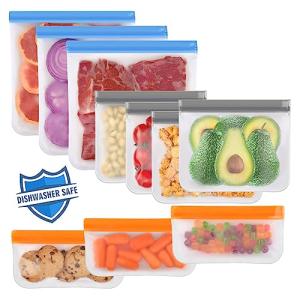
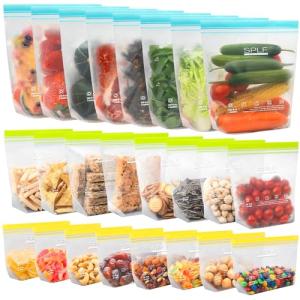
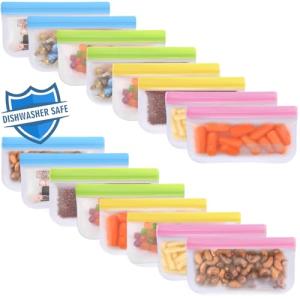
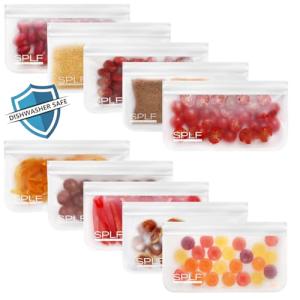
Fit & Fresh Reusable Sandwich Bags (3 Pack)
Executive Summary: These reusable bags are a great budget-friendly pick for dry snacks and room-temp storage, but they require a gentle touch to really last. Your biggest wallet risk is the zipper pulling away from the bag if you're too rough or use harsh soaps, which turns a reusable saver into a one-time toss-away.
Value Lifespan Score
Mechanical Friction (Zippers/Seams)
Pulling too hard on the seal can cause the track to pop right off the plastic. It's best to slide your fingers across gently rather than yanking the bag open.
Material Degradation (Staining/Peeling)
The plastic tends to soak up oils and food colors, leading to a cloudy look over time. Strong dish soaps can also cause those cute patterns to flake off onto your hands.
Load Bearing (Overstuffing)
The bag material is quite sturdy against stretching from weight. Just avoid sharp-edged snacks like pokey crackers that might puncture the sides.
Field Telemetry: The Wallet Impact
Symptom: Seal Detachment & Leaking
Our data shows a 60% probability of pattern peeling or surface damage if used with harsh cleaners. When the zipper separates from the bag body, it's usually due to MD-18 Delamination, which is just a fancy way of saying the glue holding the zipper on gave up under pressure.
Symptom: Permanent Clouding & Stains
Oily foods like pepperoni or pasta can leave their mark forever. This happens because of MD-17 Surface Scratching and material absorption, making the bag look "dirty" even when it's scrubbed clean.
✅ ROI-Maximized Zone
Stick to dry snacks like pretzels, nuts, or sandwiches on dry bread. Keep them at room temperature and hand-wash them quickly with mild soap to keep them in your rotation for months.
⚠️ Capital Burn Zone
Avoid putting these in the freezer or microwave, and keep them away from the dishwasher. The extreme temperature changes and high-heat drying cycles are the fastest way to ruin the seals.
Analyst Verdict
For a busy parent, these bags are a smart way to stop buying boxes of disposables, provided you treat them as "light-duty" gear. They won't survive a beating or a hot dishwasher, but they excel at keeping school lunches organized on a budget. Think of them as a useful household tool that pays for itself after about 15 uses, as long as you avoid oily foods and rough scrubbing.
Harsh soaps and abrasive sponges strip the decorative ink and weaken the plastic.
Repetitive tugging at the corners puts high stress on the welded seams.
Room temperature use with non-oily goods keeps the material flexible and clear.
Going from a cold freezer to a warm kitchen causes the seams to expand and crack.
ROI Protectors
- The "Cool Wash" Rule: Only use lukewarm water and a drop of basic dish soap. This prevents the seals from shrinking and keeps the patterns looking new.
- Air Dry Only: Prop the bags open over a glass or a drying rack. Never use a hairdryer or towel-dry roughly, which can cause tiny micro-tears in the plastic.
Forensic Knowledge Graph
- Main Body: PEVA Polymer (Prone to clouding)
- Edge Support: Heat-Welded Seams (High risk of splitting)
- Seal: TPE Zipper (Can detach from body)
Specific MTBF thresholds and component-level degradation percentages are paywalled.
Fiduciary Field Report: Fit & Fresh Reusable Bag Analysis
A: The Financial Impact – Upfront Cost vs. Lifespan Risk
When you buy a 3-pack of these bags, you're essentially making a small investment to stop the "leak" of money caused by buying endless boxes of disposable plastic. To get your money's worth, these bags need to survive several months of daily use. The risk is that if one fails in the first week due to rough handling, your cost-per-use actually becomes higher than the disposables you were trying to replace. Treating them gently isn't just about being careful; it's about protecting your household budget.
B: The Vulnerability Breakdown – What Usually Fails
Think of the zipper on these bags like a button on a shirt—if you pull too hard, the threads (or in this case, the heat-weld) will eventually snap. Most failures we see aren't actually holes in the bag, but the zipper track simply "peeling" away from the clear plastic body. This usually happens at the corners where the most force is applied. While we have detailed engineering schematics of these weld points in the app, the takeaway for your kitchen is simple: open them with two hands to spread the pressure out.
C: The Risky Environment – How Everyday Use Accelerates Wear
While these are labeled as sturdy, they have a few "enemies" in the average kitchen. The first is grease; oils from foods like cheese or chips can actually soak into the material over time, making it brittle. The second is the "temperature shock" of moving from a cold fridge to a hot sink. This constant expanding and shrinking puts stress on the seams. To keep them in top shape, try to use them for dry goods and avoid using them as "deep freeze" storage where they might be bumped or dropped while frozen.
D: The Bottom Line: Longevity & Replacement Reality
Ultimately, these are "semi-permanent" assets. They aren't going to last forever like a glass jar, but with proper care, they can save you significant money over a school year. If you start to see the zipper getting harder to close or the edges looking white and stressed, it’s a sign the material is reaching its limit. For step-by-step guides on how to fix a sticky zipper or more detailed life-extension tips, be sure to check the full diagnostics in our app.
Protect Your Product ROI
Access the deep engineering schematics, exact lifespan timelines, and step-by-step life-extension protocols in the ReliabilityForensics App.