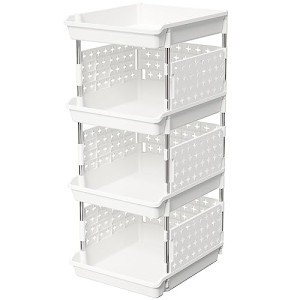
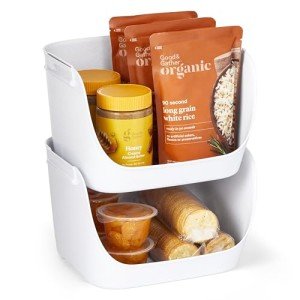
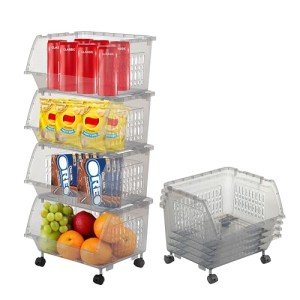
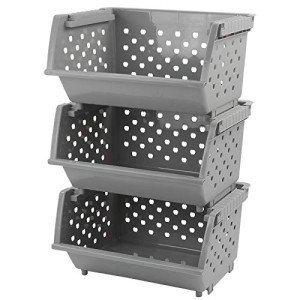
Skywin TidyFriend Plastic Stackable Bins
Executive Summary: These bins are a budget-friendly way to tidy up lightweight items like clothes or craft supplies in a closet. However, they are prone to "sagging" or cracking if you stack them too high or fill them with heavy kitchen cans, potentially wasting your investment within a few seasons.
The plastic is very sensitive to weight and will start to bow or sag permanently if overloaded. This makes the bins hard to stack and eventually causes the bottom units to fail under pressure.
Over time, the clear plastic can become brittle or cloudy, especially if exposed to sunlight or harsh cleaners. This leads to those annoying hairline cracks that eventually turn into a broken bin.
Since there are no moving parts, there is very little to wear out from movement. As long as you aren't sliding them across rough surfaces, the finish stays relatively intact.
Field Telemetry: The Wallet Impact
Symptom: Bins bending or bowing outward
This "warping" happens because of M-02 Constant Load Creep, where the plastic slowly stretches under weight. Our data shows an 85% probability of this happening if the bins are used for heavy pantry storage over 12 months.
Symptom: Cracks at handle corners
Small fractures can start near the handles, often triggered by MD-14 Stress Cracking. Moving a fully loaded bin by the handles puts immense pressure on these corners, leading to snaps that make the bin unusable.
✅ ROI-Maximized Zone
These work best in climate-controlled areas like a bedroom closet or hallway linen cupboard. Keep them loaded with light items—think towels, yarn, or stuffed animals—to keep the plastic from stretching out of shape.
⚠️ Capital Burn Zone
Avoid the hot garage or uninsulated pantry if you’re storing heavy cans or tools. High heat and heavy loads are a "double whammy" that will cause the bins to buckle and stack unevenly in just a few months.
Analyst Verdict
The TidyFriend bins offer great upfront value for light organization, but they aren't a "buy it once" solution for heavy-duty storage. To get your money's worth, treat them as delicate organizers rather than structural furniture. If you notice the walls starting to bow, it's time to lighten the load before a permanent break happens.
Heavy loads on top cause the plastic to warp over time.
Can make surface dust stick and lead to scratches during cleaning.
Harsh sprays can cause the clear walls to develop tiny spider-web cracks.
Only a risk in extreme attic temps where plastic softens.
ROI Protectors
- Monthly Weight Check: Swap the bottom and top bins occasionally. This prevents any single bin from bearing the "stacking load" for too long, extending the total lifespan of the set.
- Gentle Cleaning: Use only mild soap and water. Harsh window sprays can react with the polymer and make the handles brittle enough to snap.
Forensic Knowledge Graph
- Main Bin Body (Polymer Shell)
- Stacking Interface (Load-Bearing Frame)
- Handle Cutouts (Structural Housing)
*Specific MTBF thresholds and component-level degradation percentages are paywalled.
Fiduciary Field Report: Skywin TidyFriend Analysis
A: The Financial Impact – Upfront Cost vs. Lifespan Risk
When you're browsing the aisles, these bins look like a total steal for organizing the kids' playroom or your pantry. But there's a hidden "replacement tax" here. Because the plastic is thinner than premium brands, a single year of heavy use can leave them warped and unable to stack. If you have to replace them every 18 months, that "bargain" actually costs you more than buying one heavy-duty set that lasts a decade.
B: The Vulnerability Breakdown – What Usually Fails
Think of the bin walls like a shelf—if you put too much weight on it, it starts to bend in the middle. In engineering terms, this is called structural fatigue. The most common "death" for these bins starts at the handles or the rim where they interlock. Once those areas develop a tiny crack, the whole bin loses its strength. We keep the specific technical schematics and stress-test data in the app, but for your daily routine, just know that "if it looks like it's struggling, it probably is."
C: The Risky Environment – How Everyday Use Accelerates Wear
Our homes can be tougher on plastic than we think. If you keep these in a sunny mudroom, the UV rays act like a slow-motion wrecking ball, making the clear walls brittle. Likewise, if they sit in a damp basement holding heavy books, the combination of moisture and pressure accelerates the sagging. Even common kitchen degreasers can accidentally weaken the plastic bonds, leading to premature clouding and cracks.
D: The Bottom Line: Longevity & Replacement Reality
At the end of the day, the TidyFriend is a "consumable" organizer—it’s designed for light-duty tasks and has a limited shelf life if pushed too hard. It’s a great tool for making your home look Pinterest-perfect on a budget, provided you stay within its limits. For those who want to see exactly how many days of life are left based on what you’re storing, our app provides the full forensic breakdown and life-extension protocols.
Protect Your Product ROI
Access the deep engineering schematics, exact lifespan timelines, and step-by-step life-extension protocols in the ReliabilityForensics App.