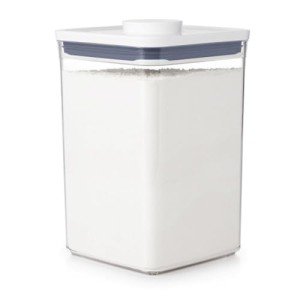
Cambro Camwear Polycarbonate Square Food Storage Container (8 Quart)
Executive Summary: This professional-grade container is a champion for bulk pantry storage and meal prep, offering incredible bang for your buck if you treat it right. To keep it crystal clear and avoid cracks, keep it away from the super-high heat of industrial dishwashers and very harsh chemicals.
Lifespan Risks
Daily bumps and stacking can lead to tiny surface scratches over time. While it won't break easily, the clear finish will eventually show its age from all that hard work.
This bucket is a powerhouse that can hold 8 quarts without breaking a sweat. It’s built to handle heavy flour or sauces without sagging or losing its shape.
Exposure to intense cleaning chemicals is the main thing that makes the plastic "get tired." Over many years, this can lead to those tiny spider-web cracks in the corners.
Field Telemetry: The Wallet Impact
Symptom: Cloudy Plastic or "Staining"
High-acid foods like tomato sauce can leave a permanent orange tint, which is a 65% probability over long-term use. This MD-16 Acrylic Clouding is mostly cosmetic but means the product looks less "new."
Symptom: Tiny Spider-Web Cracks
When exposed to extreme heat cycles, the plastic can develop MD-14 Stress Cracking. This happens when the material expands and shrinks too fast in the wash, eventually creating "fatigue" in the corners.
✅ ROI-Maximized Zone
This container thrives in a cool, dry pantry for storing things like flour, rice, or snacks. If you wash it by hand or on a standard home dishwasher cycle, it will likely last your family for a decade or more.
⚠️ Capital Burn Zone
Avoid using this for "hot-fill" scenarios (like pouring boiling soup straight in) followed by a high-heat industrial scrub. The constant "temperature shock" is the fastest way to turn this durable tool into a cracked mess.
Analyst Verdict
For a busy parent, this is a "buy once, cry once" kind of product because it's significantly tougher than the thin bins you find at the grocery store. It is a fantastic investment for organizing a kitchen, as long as you treat the plastic with a little kindness regarding heat and chemicals. You are essentially getting restaurant-quality gear that is designed to take a beating and keep your food fresh.
ROI Protectors
- Choose Mild Soaps: Using regular dish soap instead of heavy-duty degreasers keeps the polycarbonate bonds strong and clear for years longer.
- Skip the Heated Dry: Letting the lid air-dry prevents it from warping, ensuring you always have a perfect, airtight snap-fit for your food.
Forensic Knowledge Graph
- Polymer Shell (Main Body)
- Structural Fatigue (Cracking Vector)
- Thermal Distortion (Lid Failure)
Specific MTBF thresholds and component-level degradation percentages are paywalled.
Fiduciary Field Report: Cambro Camwear Analysis
A: The Financial Impact – Upfront Cost vs. Lifespan Risk
When you buy a Cambro, you're paying a bit more upfront than you would for a "disposable" container, but the math works in your favor. Because these are built for restaurants, they can handle the "tumble" of a busy household without shattering. The only real risk to your wallet is if you treat them like steel; plastic has its limits, and neglecting the cleaning basics can lead to a premature replacement cost in 3-4 years instead of 10.
B: The Vulnerability Breakdown – What Usually Fails
Think of the plastic like a rubber band—it's flexible until it gets old and dried out. The main failure point is "stress cracking" in the corners. It’s not a sudden break, but more like a slow wear-out from being cleaned with very harsh, basic chemicals. The lid can also get a bit "wavy" if it’s cooked in the dishwasher's drying cycle. We've tucked the exact technical repair steps and diagnostic charts away in the app for when you need a deep dive.
C: The Risky Environment – How Everyday Use Accelerates Wear
Humidity and normal storage are fine, but the "danger zone" is the combination of heat and chemicals. If you're using this to store acidic things like marinara and then washing it with a high-heat "sanitize" setting, you're basically putting the material through a workout it wasn't designed for. This causes the surface to "fog up" and lose that beautiful glass-like look we all love.
D: The Bottom Line: Longevity & Replacement Reality
This is definitely a durable long-term asset, not a throwaway item. It is a workhorse for any organized kitchen. To get the most years out of your investment, treat it like your favorite "nice" kitchen tools—hand wash when you can and avoid the highest heat settings. For the specific "end of life" signs and more ways to make it last even longer, check out our full protocols in the app.
Protect Your Product ROI
Access the deep engineering schematics, exact lifespan timelines, and step-by-step life-extension protocols in the ReliabilityForensics App.