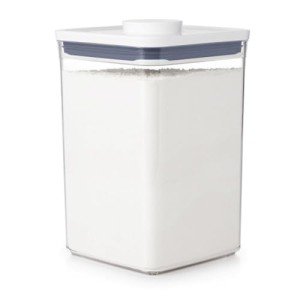
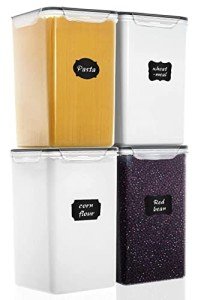
Rubbermaid Brilliance 16-Cup Airtight Food Storage Container
Executive Summary: This premium container offers a crystal-clear look at your pantry staples and is a champion at keeping air out, making it a great long-term investment for dry goods. However, the side latches and hidden seal areas require gentle handling to avoid the "hidden tax" of early breakage or hygiene issues.
Value & Lifespan Score
This tracks how much wear and tear the moving latches can take. Opening and closing these daily eventually wears down the plastic "elbows" of the container.
This measures how the clear plastic holds up against stains and tiny cracks. It's very durable, but hot dishwashers can make the plastic look foggy over time.
The container is quite strong when stacked in your pantry. It can handle the weight of other containers on top without bowing or cracking.
Field Telemetry: The Wallet Impact
Latch Snapping & Pivot Failure
The most common "budget killer" is when the side locks snap off at the hinge. This often happens because of M-06 Hinge Fatigue, especially if the plastic gets brittle from extreme temperatures.
Hygiene & Seal Integrity
Our data shows a 28% probability of seeing black spots under the rubber seal if it isn't dried perfectly. This MD-13 Mold Growth happens when moisture gets trapped in the tight spaces where the seal meets the lid.
✅ ROI-Maximized Zone
Keep these in a cool, dry pantry for storing flour, sugar, or snacks. Hand-washing the lids and letting them air dry completely ensures you won't have to replace them for years.
⚠️ Capital Burn Zone
Avoid using these for greasy leftovers and then tossing them in a high-heat dishwasher. The combo of oils and heat causes the plastic to cloud and the hinges to weaken much faster.
Analyst Verdict
The Rubbermaid Brilliance is a "buy once, cry once" product—it's more expensive than basic bins but looks much better and seals tighter. While it has some small weak points like the hinges, it’s one of the most reliable options for keeping a pantry organized and food fresh. If you stick to hand-washing the lids, you’ll likely get double the lifespan compared to cheaper alternatives.
Repeatedly opening and locking the latches creates stress that can cause the plastic to snap.
Water trapped under the rubber seal can cause stains and spots that are hard to clean away.
The sturdy walls are great at supporting weight without bending or losing their shape.
Harsh soaps can react with the clear polymer, leading to a cloudy or foggy look.
ROI Protectors
- Skip the Dishwasher for Lids: Hand-washing avoids the high heat that makes the latch pivots brittle, potentially doubling the time before a latch breaks.
- The "Air-Dry" Rule: After washing, let the lids sit out or use a hair dryer on a cool setting to clear moisture from the seal, preventing gross mold spots.
Forensic Knowledge Graph
- 📍 CP-01 Polymer Shell (The Clear Body)
- 📍 CP-02 Seal System (The Airtight Ring)
- 📍 CP-03 Hinge Assembly (The Side Latches)
- ⚠️ MD-16 Clouding (Visual Wear)
Specific MTBF thresholds and component-level degradation percentages are paywalled.
Fiduciary Field Report: Rubbermaid Brilliance Analysis
When you're trying to keep a kitchen running smoothly, you want containers that actually do their job. The Rubbermaid Brilliance is a premium pick, but as a savvy shopper, it's important to know exactly where your money is going and how to protect that investment.
A: The Financial Impact – Upfront Cost vs. Lifespan Risk
Buying a set of these is definitely a bigger hit to the wallet than buying a pack of basic plastic bins. You're paying for that crystal-clear look and a seal that actually keeps your cereal from going stale. The hidden cost comes if you have to replace them because a latch snaps off. To get your money's worth, treat the lids with a bit more care than the bases; the base is a tank, but the lid is where the "moving parts" live.
B: The Vulnerability Breakdown – What Usually Fails
Think of the side latches like a paperclip—if you bend it back and forth too many times, it eventually snaps. In engineering terms, we call this structural fatigue. The pivots on these containers are built well, but they aren't immortal. Also, the rubber seal is "integrated," which means it's stuck in there tight. This is great for leaks, but it creates tiny "moisture pockets" where mold can hide if you don't dry them out. We’ve got the full repair guides and schematics in the app, but for daily life, just know that hinges and seals are the two areas to watch.
C: The Risky Environment – How Everyday Use Accelerates Wear
Your dishwasher is essentially a high-heat stress test. The hot water makes the plastic expand and then shrink, which can lead to tiny, invisible cracks. If you're storing something like spaghetti sauce, the oils can actually react with the plastic during this heat cycle, leading to that foggy, clouded look. Even cold weather can be a risk—if you pull a container out of a cold garage or fridge and immediately snap the latches open, the plastic is much more likely to crack because it’s "stiff."
D: The Bottom Line: Longevity & Replacement Reality
This isn't a disposable item; it's a long-term asset for your home. If you treat it like a "hand-wash only" item for the lids and keep it away from extreme heat, it can easily last 5+ years. If you treat it like a cheap takeout container, you might find yourself shopping for replacements in 12 months. For the specific charts on how long these last under different household conditions, check out the life-extension protocols in our app.
Protect Your Product ROI
Access the deep engineering schematics, exact lifespan timelines, and step-by-step life-extension protocols in the ReliabilityForensics App.