Maintenance & Troubleshooting
Preserving wood health requires maintaining a stable relative humidity to prevent the internal tension that leads to splitting and fastener pops. Periodically checking the torque of mechanical joints and reapplying a breathable sealant can stop minor structural drifting before it leads to total frame collapse.
Common Failure Modes
Wooden structures are susceptible to specific mechanical and material stresses that can compromise their load-bearing capacity over time.
- Repeated loading and unloading of heavy items can eventually lead to cyclic fatigue failure; inspect the grain for hairline fractures and retire crates that show signs of fiber separation.
- The most common maintenance issue in humid climates is moisture swelling; allow for expansion gaps between slats and use a dehumidifier to keep wood within its ideal 6-8% moisture range.
- Improper weight distribution often results in structural warping; ensure heavy items are centered over the bottom supports to maintain the crate’s rectangular geometry.
- Over-tightening or rough handling frequently causes joint loosening; reinforce wobbling corners with wood glue and fresh fasteners to restore lateral stability.
- Stacking crates beyond their rated capacity will lead to overload deformation; use a rigid internal liner or distribute weight across multiple units to prevent the bottom slats from bowing.
- In older or poorly maintained units, you may notice small hardware failure; replace rusted or loose nails with stainless steel screws to improve the grip within the wood fibers.
Environmental Stress Factors
The placement of your wooden crates significantly impacts their lifespan and the safety of the items stored within them.
- Placing timber storage in laundry rooms or basements risks high humidity acceleration; apply a water-resistant wax coating to create a moisture barrier against rot.
- Conversely, keep crates away from radiators to avoid low humidity desiccation; use a humidifier during winter months to prevent the wood from shrinking and cracking.
- Extended display near windows can lead to high UV exposure; use UV-rated clear coats to shield the lignin in the wood from breaking down and becoming brittle.
- Crates used for pantry storage must be monitored for pest intrusion; store food in airtight secondary containers and inspect the wood grain monthly for boreholes.
Key Components
Each crate is engineered with specific structural elements designed to maximize strength and ease of use.
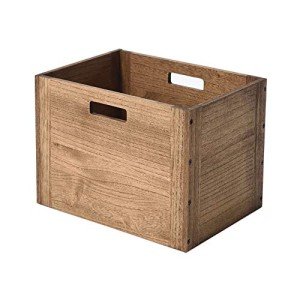
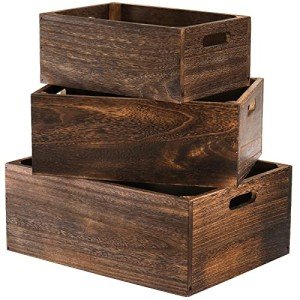
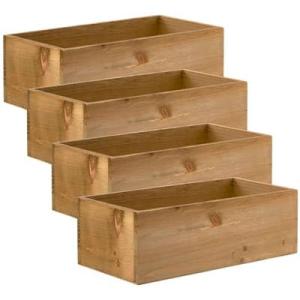
- The rigid structural housing serves as the primary skeleton; check for uniform slat thickness to ensure consistent weight distribution across the frame.
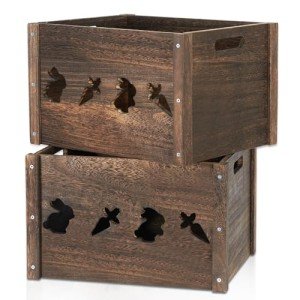
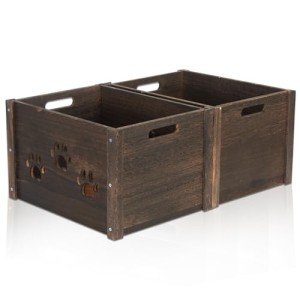
- At every corner, a robust fastener system holds the assembly under tension; look for recessed hardware that won't snag fabrics or scratch surfaces.
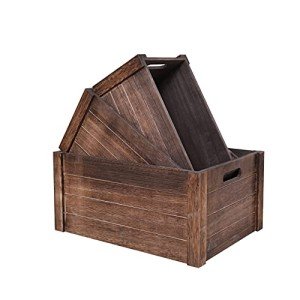
- The corners often utilize a load bearing frame; prioritize vertical corner posts that are thicker than the side slats for superior stacking strength.
- A protective surface coating shields the raw timber; choose food-grade oils or low-VOC lacquers depending on whether the crate will touch pantry goods or textiles.
- High-stress areas may feature a reinforced adhesive bond layer; inspect the joints for visible glue squeeze-out, which indicates a complete and secure bond between components.
Related Categories
If you are researching comprehensive home storage or alternatives to rigid timber, you may also want to review the durability profiles of these related devices:
- For dynamic playrooms, examine rolling toy crates which integrate casters that place different mechanical stresses on the base frame.
- If you require a softer texture for linens, large woven baskets offer superior breathability without the risk of wood snags.
- Maximize vertical capacity in mudrooms by evaluating storage benches which utilize an external load-bearing frame to protect the internal bins.