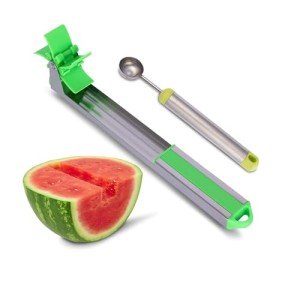
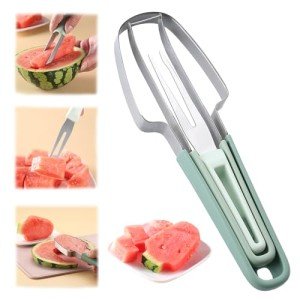
Maintenance & Troubleshooting
Hand-drying metal slicing wires immediately after use prevents the microscopic pitting that leads to structural snapping under pressure. Periodically massaging food-grade mineral oil into lid gaskets will maintain the seal's pliability and prevent the compression set that causes juice leaks.
Common Failure Modes
Mechanical stress and repeated exposure to fruit acids can eventually impact the structural integrity and performance of your slicing and storage tools.
- To prevent Cyclic Fatigue, avoid "sawing" motions; apply a single, steady vertical force to minimize the vibration that causes metal snapping.
- Extend the life of your container by supporting the lid while closing to reduce Hinge Fatigue on the plastic pivot points.
- Prevent Overload Deformation by trimming the ends of the melon first to provide a flat, stable entry point for the slicing wires.
- Combat Seal Compression by storing the container with the lid unlatched when empty to allow the silicone to return to its original shape.
- Reduce Surface Scratching by using only soft microfiber cloths; avoid green scouring pads which create bacteria-trapping grooves in the plastic.
- Address Joint Loosening by checking manual fasteners monthly and tightening any wobbly screws to ensure safe, high-pressure operation.
- Stop Corrosion by rinsing away all fruit acids within thirty minutes of use, particularly in the hard-to-reach crevices where the blade meets the frame.
Environmental Stress Factors
The kitchen environment presents unique challenges that can degrade the materials used in fruit processing and preservation equipment.
- Protect your keepers from High UV Exposure by storing them in dark cabinets; sunlight breaks down polymer chains, making clear plastics turn yellow and brittle.
- Eliminate Mold Growth by using a soft toothbrush to scrub the tracking grooves of your slicer where organic sugars tend to crystallize.
- Prevent a Cleaner Compatibility Conflict by avoiding bleach-based sprays, which can cause "pitting" on even high-grade stainless steel slicing edges.
- Avoid Heat Warping by placing plastic components on the top rack of the dishwasher only, away from the high-intensity heating element at the bottom.
Key Components
Watermelon tools are built with specific structural elements designed to withstand the high torque required for slicing large melons.
- The Load Bearing Frame acts as the chassis for the cutting wires, requiring rigid construction to prevent dicing misalignment.
- A high-performance Seal Gasket is the primary defense against ethylene gas and oxidation, keeping the fruit's cellular structure crisp.
- The Polymer Shell of a keeper must be impact-resistant to survive the weight of a fully loaded fruit container in the fridge.
- The Fastener System is responsible for maintaining the high tension of the slicing wires; loose fasteners result in jagged, uneven cuts.
- An ergonomic Structural Housing on the handle distributes the force of the cut across the palm to prevent localized pressure points.
If you are researching full-room setups, you may also want to review the failure expectations for these related devices: