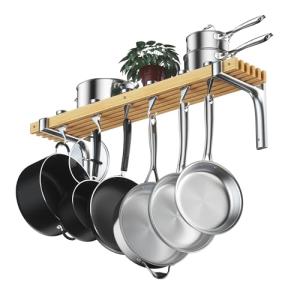
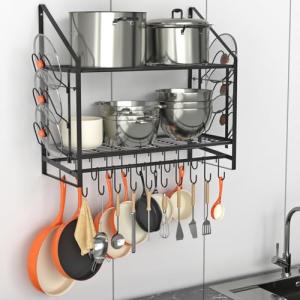
Maintenance & Troubleshooting
Performing semi-annual torque checks on wall anchors and inspecting hook contact points for thinning metal prevents catastrophic mechanical drops. Regularly stripping accumulated grease prevents the acidic breakdown of protective powder coatings that leads to surface oxidation.
Common Failure Modes
Even the sturdiest kitchen racks can succumb to mechanical stress or chemical changes over years of supporting heavy cast iron and copper cookware.
- To prevent cyclic fatigue, avoid sliding heavy pans across the grid; instead, lift them cleanly to reduce micro-vibrations that weaken the metal molecular structure over time.
- Prevent creep deformation by rotating the placement of your heaviest Dutch ovens so no single bar remains under peak load for more than a few weeks.
- Address surface scratching immediately with a matching touch-up kit to prevent steam from reaching the raw steel beneath the finish.
- Fix joint loosening by applying a medium-strength thread locker to assembly bolts during initial installation to resist the vibrations of daily kitchen activity.
- Mitigate small hardware failure by upgrading standard plastic wall plugs to toggle bolts or heavy-duty zinc anchors rated for double the rack's maximum capacity.
- Avoid overload deformation by checking the individual hook weight rating, as single-point failures often occur even when the main frame is within limits.
- Prevent coating peeling by avoiding the use of metal scrubbers during cleaning, which creates microscopic edges that steam can penetrate to lift the finish.
- Detect hidden corrosion by pulling the mounting plates slightly away from the wall during annual inspections to check for rust blooms behind the hardware.
Environmental Stress Factors
The kitchen is a rigorous environment where heat, moisture, and cleaning agents constantly interact with your storage hardware.
- Combat high humidity by ensuring your range hood is functioning properly to evacuate steam before it can condense on cold metal rack surfaces.
- Manage the dust load by using a microfiber cloth and warm, soapy water weekly to prevent airborne grease from polymerizing into a sticky, corrosive layer.
- Prevent cleaner compatibility conflict by avoiding ammonia-based glass cleaners on wrought iron or brass finishes, which can cause permanent discoloration.
- Minimize the effects of temperature extremes by mounting racks at least 24 inches above the stovetop to reduce the rate of thermal expansion in the mounting fasteners.
Key Components
A high-quality pot rack relies on specialized engineering to safely suspend dozens of pounds of kitchen equipment above your workspace.
- The load bearing frame should ideally be constructed from 1/4-inch thick steel or solid wood to ensure it does not bow under a full set of cast iron.
- Your fastener must be long enough to penetrate at least 1.5 inches into a structural stud to provide sufficient pull-out resistance.
- A high-quality polymer shell or powder coat provides a non-porous barrier that prevents kitchen grease from reaching the structural metal core.
- The structural housing at the wall-mount point should be wide enough to bridge any gaps in the wall substrate and provide a stable footprint.
- Check the surface coating on the hooks for a "soft-touch" finish that helps dampen the sound of metal-on-metal contact and preserves pan handles.
- The grid shelf provides lateral stability to the overall frame while offering a secondary storage tier for lids and flat pans.
Related Categories
If you are researching full-room storage setups or vertical organization, you may also want to review the failure expectations for these related devices: