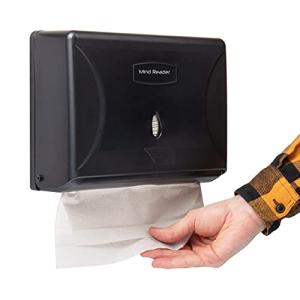
Maintenance & Troubleshooting
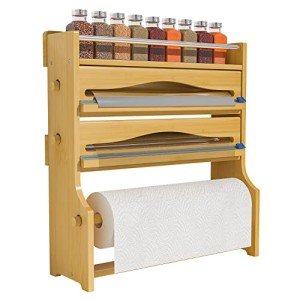
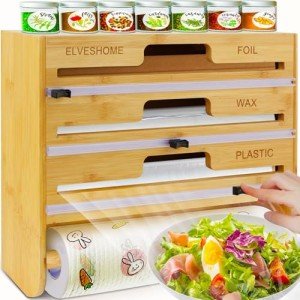
Maintaining a dispenser requires proactive lubrication of sliding tracks to prevent blade binding and regular torque checks on wall anchors to offset the constant pulling force of paper towel removal. Keeping the internal cutting channel free of adhesive residue from plastic wraps ensures the blades remain sharp and the sliding mechanism moves without snagging.
Common Failure Modes
Mechanical dispensers are subject to repetitive physical strain that can eventually lead to functional degradation or hardware failure.
- Repeated pulling of heavy paper towel rolls often leads to joint loosening; check and tighten mounting screws quarterly to prevent the brackets from wallowing out the drywall.
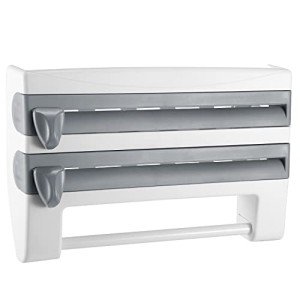
- The internal mechanisms of plastic wrap cutters may experience abrasive wear; clean the blade track monthly with a dry brush to remove debris that dulls the cutting edge.
- Over-tightening the mounting screws during installation can result in stress cracking; use a manual screwdriver rather than a power drill to avoid putting excessive pressure on the plastic chassis.
- Frequent lid opening for roll replacements can cause hinge fatigue; apply a tiny amount of food-grade silicone lubricant to the pivot pins to reduce friction and snap-stress.
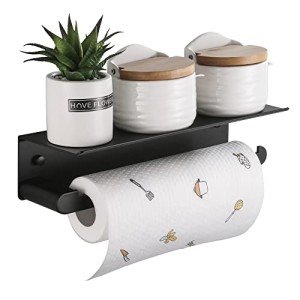
- Consistent downward pressure on the paper towel arm may cause overload deformation; avoid leaning on the unit and ensure the roll weight does not exceed the manufacturer's load rating.
- Small metal fasteners inside the cutting slide are prone to small hardware failure; if the slider feels loose, inspect the internal retaining clips before the mechanism detaches.
Environmental Stress Factors
The kitchen environment presents unique challenges that can accelerate the aging process of your wall-mounted dispensing hardware.
- Kitchens are prone to high humidity acceleration; ensure the unit is mounted away from direct stove steam to prevent the metal springs and blades from oxidizing.
- Exposure to airborne grease and cooking particles creates a significant dust load; wipe down the internal rollers during every roll change to prevent a sticky film from seizing the rotational drive.
- Using harsh chemical disinfectants near the dispenser may lead to cleaner compatibility conflict; use only mild soap and water on acrylic or plastic housings to prevent chemical crazing and clouding.
Key Components
Each dispenser is engineered with specialized parts designed to manage roll tension and facilitate precise, safe cutting of various materials.
- The load bearing frame distributes the weight of the rolls; check for metallic frames if you intend to use heavy-duty or industrial-sized paper towel rolls.
- Internal roll holders utilize a rotational drive assembly to regulate unspooling; inspect the end-caps for wear to ensure rolls stay centered and spin evenly.
- The safe-touch sliding blades are housed within a dedicated dispensing mechanism; ensure the slider path is clear of obstructions to maintain a clean, single-pass cut.
- A sturdy structural housing keeps the rolls hygienic; choose models with enclosed covers if the unit is mounted near high-splat prep areas.
- Many models include a spring elastic component to provide tension; if the roll spins too freely, check this spring for loss of elasticity or detachment.
Related Categories
If you are researching comprehensive kitchen organization, you may also want to review the hardware durability expectations for these related categories: