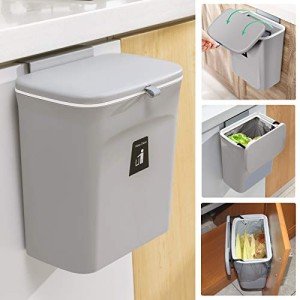
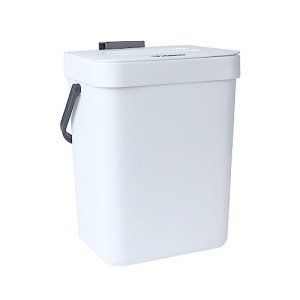
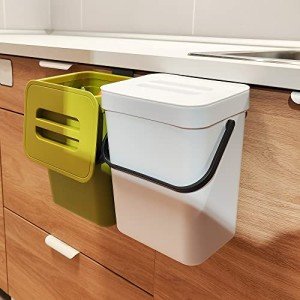
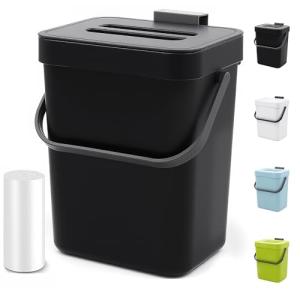
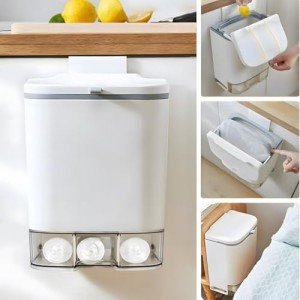
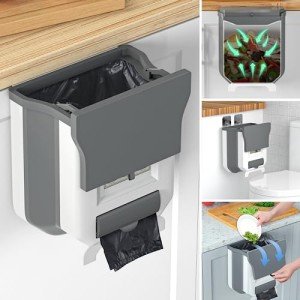
Maintenance & Troubleshooting
Preventing hardware migration and odor leaks requires a monthly inspection of the bracket fasteners and a deep-clean of the gasket tracks. Addressing minor hinge resistance early prevents the mechanical snap that occurs when organic weight exceeds the pivot's torque capacity.
Common Failure Modes
Even the most robust hanging bins face specific mechanical and structural challenges due to daily repetitive use and the heavy weight of organic waste.
- To prevent Hinge Fatigue, avoid forcing the lid past its natural stop point and clean the pivot pins weekly to remove abrasive organic grit.
- Mitigate Overload Deformation by emptying the bin once it reaches the three-quarter mark, preventing the heavy weight of wet scraps from bowing the plastic rim.
- Stop Joint Loosening by checking the mounting screws every 30 days; vibrations from opening and closing the cabinet door naturally back out standard fasteners.
- Reduce the risk of Stress Cracking by ensuring the bin is seated fully in its bracket before filling, which distributes the load evenly across the mounting hooks.
- Combat Seal Compression Fatigue by wiping the gasket with food-grade silicone oil every few months to keep the rubber pliable and capable of maintaining an airtight fit.
- Prevent Small Hardware Failure by replacing any rusted or stripped nuts immediately to keep the internal frame from shifting during use.
Environmental Stress Factors
The dark, humid environment under a kitchen sink creates unique challenges for materials and hygiene maintenance.
- Manage High Humidity Acceleration by keeping the under-sink area organized and ensuring there are no slow plumbing leaks that could degrade the bin's adhesive mounts.
- Prevent Mold Growth by removing the bin from its bracket once a week to dry the cabinet wall and the exterior of the bin housing with a microfiber cloth.
- Avoid a Cleaner Compatibility Conflict by using only mild, pH-neutral soaps; avoid ammonia-based cleaners that can turn the polymer shell brittle and prone to shattering.
Key Components
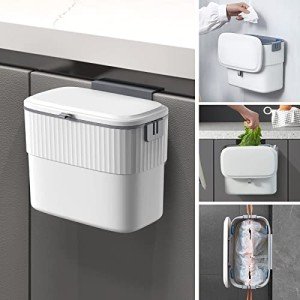
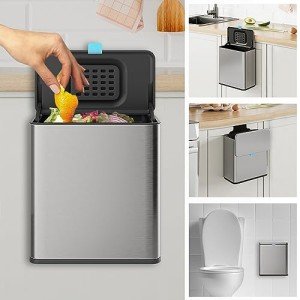
Each part of a hanging compost system is engineered to balance weight distribution with ease of access and odor containment.
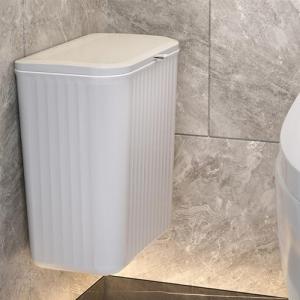
- The Polymer Shell must be thick enough to resist sagging when full; look for high-density polyethylene for the best balance of weight and durability.
- A rigid Load Bearing Frame is critical for door-mounted units to ensure the weight is pulled toward the hinges of the cabinet rather than pulling the door out of alignment.
- The Hinge Pivot Assembly should operate with minimal friction; a gritty hinge indicates that juice or debris has infiltrated the mechanical joint.
- An intact Seal Gasket is your only defense against fruit flies; inspect the rim for gaps or flattened sections that no longer make contact with the lid.
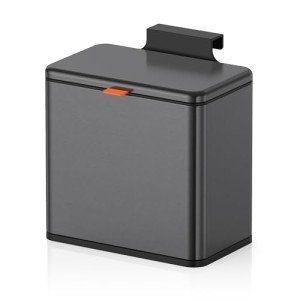
- The Fastener System dictates the stability of the entire unit; ensure mounting hooks are wide enough to clear the top of the cabinet door without scratching the finish.
Related Categories
If you are researching full-room waste management, you may also want to review the failure expectations for these related devices: