Maintenance & Troubleshooting
Wiping the quartz lamp with 90% isopropyl alcohol every two weeks is critical to prevent skin oils from baking onto the glass and blocking germicidal wavelengths. If your wand fails to strike an arc, inspecting the battery terminal tension can often resolve intermittent power issues without requiring a full device replacement.
Common Failure Modes
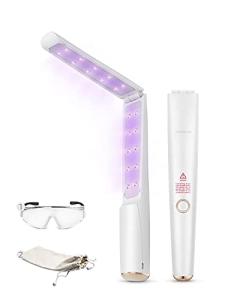
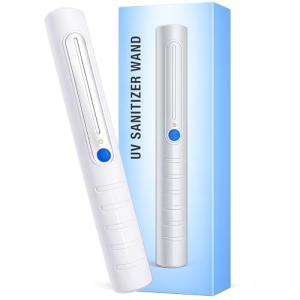
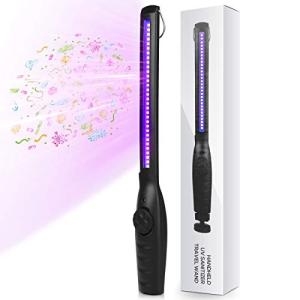
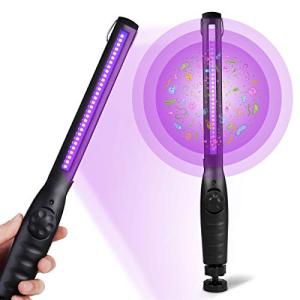
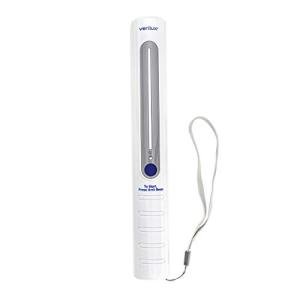
Handheld sanitizers are precision instruments that can lose efficacy due to mechanical and electrical fatigue over time.
- Repeated drops or rough handling often lead to Vibration Crack Propagation; inspect the bulb housing for hairline fractures regularly to ensure the pressurized lamp remains intact.
- The internal electronics may experience Solder Joint Crack from constant motion; avoid storing the wand in high-vibration areas like outer luggage pockets to preserve circuit integrity.
- Frequent use of the power button can result in Switch Contact Wear; press the button squarely and gently to prevent the internal leaf springs from deforming and losing connectivity.
- If the wand is stored in a discharged state, you may encounter Battery Fade; maintain a 50-80% charge during long-term storage to prevent permanent lithium-ion capacity loss.
- High-voltage components may fail due to Insulation Breakdown; avoid using the device in high-humidity environments where moisture can bridge internal high-voltage paths.
- The protective outer casing can become brittle because of UV Embrittlement; check for "chalking" or surface cracks on the plastic near the bulb and replace the unit if the shell loses its impact resistance.
Environmental Stress Factors
The environments where you travel can impact the sensitive quartz and electronic elements of your sanitizer.
- Exposure to fine particles in transit can result in Dust Load on the bulb; always store the wand in a protective sleeve to keep the lamp surface clear and maximize UV output.
- If you frequently visit coastal regions, the electronics are susceptible to Salt Exposure; wipe the exterior regularly to prevent saline residue from wicking into the internal control board.
- Leaving your wand in a hot vehicle can cause Temperature Extremes; keep the device in your carry-on or temperature-controlled luggage to prevent the battery from swelling or the bulb filaments from sagging.
Key Components
Each part of a handheld sanitizer wand is specifically chosen to maximize germ-killing power in a small form factor.
- The Polymer Shell serves as a lightweight protective chassis that must shield the user from stray UV-C radiation.
- Reliable operation depends on the Battery System, which must provide high-amperage bursts to energize the germicidal lamp.
- Modern wands utilize How Electronic Control Boards Manage Smart Storage to monitor safety sensors and prevent accidental eye exposure.
- The internal Wiring Harness routes power from the primary cells to the high-voltage inverter without creating electromagnetic interference.
- Efficient energy transfer is managed by the Power Supply System, which steps up battery voltage to the kilovolt levels required for UV-C tube ignition.
Related Categories
If you are researching travel health and hygiene systems, you may also want to review the failure expectations for these related devices: