Maintenance & Troubleshooting
Infrared sensors require a contaminant-free optical path and stable battery voltage to calculate thermal radiation accurately. Regular inspection of the sensor window and terminal cleaning is necessary to prevent the incremental calibration errors that lead to false readings.
Common Failure Modes
Electronic diagnostic tools are susceptible to specific mechanical and electrical degradations over time that can compromise reading accuracy.
- Internal measurement inaccuracies often stem from gradual sensor drift; perform periodic ice-bath reference checks to verify calibration consistency.
- The sensitivity of the internal motherboard makes it prone to static discharge damage; always touch a grounded metal surface before opening the battery compartment in dry environments.
- Frequent use of the trigger mechanism eventually causes switch contact wear; if activation becomes intermittent, the internal leaf switch may require a technical replacement.
- Leaking alkaline cells frequently cause contact oxidation; remove batteries during long periods of non-use to prevent terminal corrosion.
- Repeated heating and cooling of the internal electronics during storage can trigger solder joint crack; avoid storing the unit near HVAC vents to prevent thermal expansion fatigue.
- If the device is dropped, the delicate optical alignment may suffer from impact fracture; inspect the internal lens housing for rattles or shifts after any significant fall.
- Exposure to extreme heat can lead to PCB overheating; keep the device out of direct sunlight to protect the primary processing chip from permanent logic gate damage.
- The liquid crystal display is vulnerable to delamination; store in a climate-controlled area to prevent screen layer separation and digit fading.
Environmental Stress Factors
The accuracy of infrared thermometry is highly dependent on the stability of the surrounding environment and the cleanliness of the device.
- Microscopic particles can settle on the lens, making dust load a primary cause of obstructed signal reception; clean the sensor with a 70% isopropyl alcohol swab every few weeks.
- Electronic components are highly sensitive to high humidity acceleration; use silica gel desiccant packets in your storage case to prevent internal short circuits.
- Storing the device in a car or sunlight-exposed area leads to temperature extremes; allow the device to acclimate to room temperature for 30 minutes before taking a reading.
- Harsh chemical fumes can cause cleaner compatibility conflict; never spray cleaning agents directly onto the infrared filter to avoid permanent etching.
Key Components
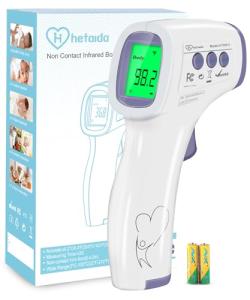
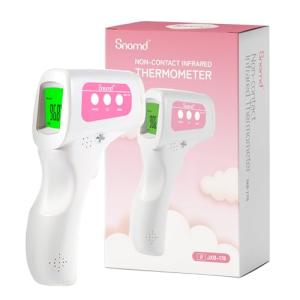
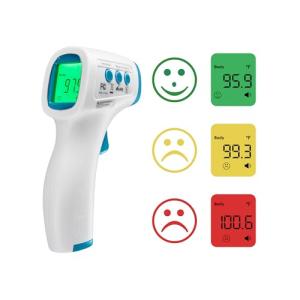
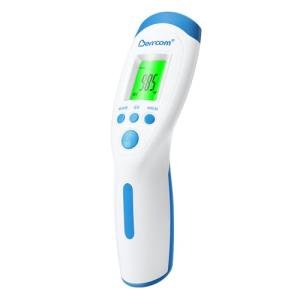
Understanding the internal anatomy of a digital thermometer helps users identify which parts require the most care and protection.
- The core of the device is the sensor, which detects infrared radiation and converts it into a measurable electrical signal.
- Information is processed and displayed via how electronic control boards manage smart and where they break down, acting as the brain of the thermometer.
- The entire internal assembly is protected by a durable polymer shell designed to withstand minor drops and provide an ergonomic grip.
- Portable power is supplied through a dedicated battery, which must be kept free of corrosion for consistent performance.
- Critical data pathways are maintained by a complex wiring harness that connects the trigger, sensor, and display screen.
- To prevent the internal processor from lagging, a small thermal interface material helps dissipate heat away from the sensitive chipset.
Related Categories
If you are researching full-room setups or medical preparedness, you may also want to review the failure expectations for these related devices: