Maintenance & Troubleshooting
Preventing lid deformation requires a strict "cool-down" period before snapping latches shut on steaming food to avoid vacuum-induced warping. Regularly removing and sanitizing the perimeter gaskets ensures that organic residues do not trigger chemical degradation of the sealing polymer.
Common Failure Modes
Over time, frequent use in harsh kitchen appliances can lead to specific mechanical and material breakdowns in your storage gear.
- Repeated heating and cooling cycles often cause heat warping; always rest lids loosely during microwaving to allow pressure equalization and prevent rim distortion.
- The daily friction of snapping lids can lead to stress cracking; inspect hinge points for whitening or "crazing" and retire units before the plastic shears.
- Aggressive scrubbing results in surface scratching; use non-abrasive cellulose sponges to prevent the creation of bacterial harbors in the plastic matrix.
- Overfilling containers before freezing may cause impact fracture; leave a 10% headspace for liquid expansion to prevent internal pressure from making the polymer brittle.
- Continuous perimeter pressure causes seal compression fatigue; store containers with lids unlatched when empty to allow the silicone to regain its original profile.
- Harsh dishwasher detergents may lead to polymer softening; use the top rack only and avoid "extra hot" dry cycles to preserve the resin’s structural rigidity.
Environmental Stress Factors
External conditions in your kitchen and pantry play a critical role in the long-term durability of your meal prep sets.
- Exposure to temperature extremes weakens molecular bonds; let frozen containers sit at room temperature for five minutes before applying microwave heat.
- Using incompatible degreasers can lead to a cleaner compatibility conflict; avoid citrus-based cleaners which can chemically etch and weaken certain polypropylenes.
- Leaving sets in direct sunlight causes high UV exposure damage; store clear sets in dark cabinets to prevent the polymer from yellowing and losing its impact resistance.
Key Components
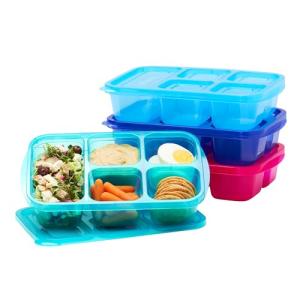
Modern meal prep containers are sophisticated tools comprised of several vital parts that ensure food safety and portability.
- The primary polymer shell acts as the chassis, providing the necessary chemical resistance for oily or acidic food contact.
- Each lid features a specialized seal gasket system that must remain pliable to block oxygen ingress and maintain contents' freshness.
- The integrated hinge pivot assembly is the most active mechanical part and should be kept free of grit to ensure smooth articulation.
- The external structural housing design dictates the load-bearing capacity when stacking multiple units in a vertical refrigerator column.
- Advanced models use a container packaging system where standardized dimensions allow for universal lid compatibility across different volumes.
Related Categories
If you are researching comprehensive kitchen organization and food preservation, you may also want to review the failure expectations for these related devices: