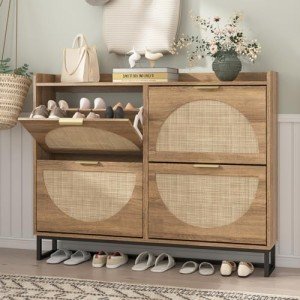
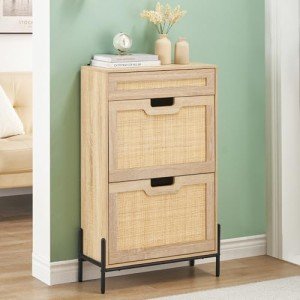
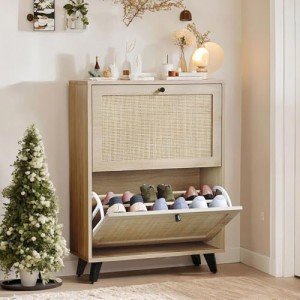
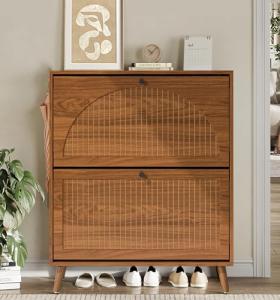
Maintenance & Troubleshooting
To prevent irreversible mechanical seizing, apply a dry silicone lubricant to all pivot points and sliding tracks every six months. Monitoring the alignment of door gaps allows you to tighten the fastener system before minor vibrations lead to permanent thread stripping in the cabinet walls.
Common Failure Modes
Daily mechanical use and heavy weight loads can eventually lead to specific structural or hardware issues in storage furniture.
- Prevent Hinge Fatigue by periodically re-tensioning the adjustment screws to keep doors centered and stress-free.
- Avoid Structural Warping by distributing heavy winter footwear across the bottom-most shelves to lower the unit's center of gravity.
- Stop Joint Loosening by installing small L-brackets at the rear corners if the unit begins to sway during use.
- Address Sliding Track Wear by vacuuming out debris from the rails monthly to ensure the bearings move without grinding.
- Mitigate Coating Peeling by placing clear adhesive liners on high-friction shelf surfaces where shoes are frequently dragged.
- Eliminate Overload Deformation by adhering strictly to the maximum weight per shelf, usually indicated by the manufacturer's engineering specs.
Environmental Stress Factors
Where you place your cabinet significantly impacts the health of both the furniture and the footwear stored inside.
- To combat High Humidity, place cedar blocks or charcoal bags inside the cabinet to absorb moisture and prevent mold spore activation.
- Reduce High UV Exposure by applying a UV-resistant wax or film if the cabinet is positioned near a sun-facing window.
- Manage the Dust Load by ensuring door seals are flush, preventing abrasive grit from entering the hinge mechanisms and shoe interiors.
- In maritime climates, neutralize Salt Exposure by wiping down metal hardware with a damp cloth followed by a light coat of anti-corrosion oil.
Key Components
The longevity of a shoe cabinet depends on the quality of its individual parts and its foundational build.
- A high-density Load Bearing Frame is essential; verify the material thickness to ensure it can withstand long-term gravitational stress.
- The Hinge Pivot Assembly should ideally feature soft-close dampening to reduce the impact force that causes screw pull-out.
- Robust Structural Housing prevents the cabinet from racking; check for a solid back panel rather than thin cardboard.
- A precision Sliding Rail made of steel rather than plastic will provide significantly higher resistance to daily abrasive wear.
- The Fastener System should utilize cam-locks and dowels that are tightened until fully flush to maintain lateral stability.
Related Categories
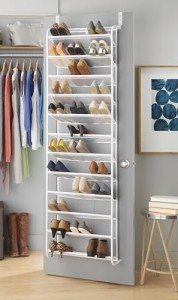
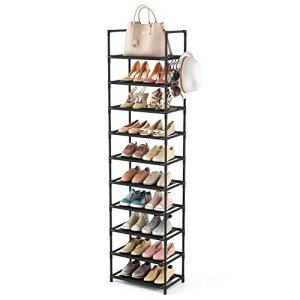
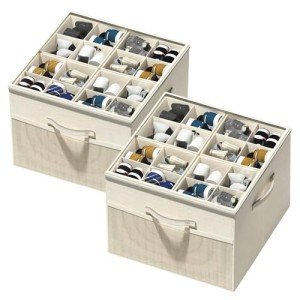
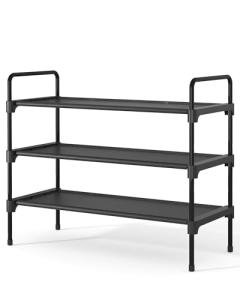
If you are researching full-entryway or closet setups, you may also want to review the failure expectations and hardware specs for these related storage devices: