Maintenance & Troubleshooting
Regularly cleaning the friction-grip rollers with isopropyl alcohol removes accumulated oils and dust that cause tool slippage. Periodically re-torquing the wall anchors prevents the "seesaw" effect that leads to drywall cracking and bracket deformation.
Common Failure Modes
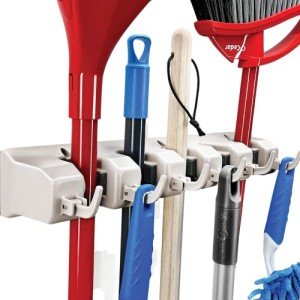
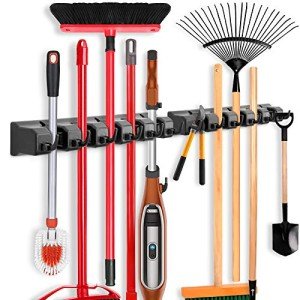
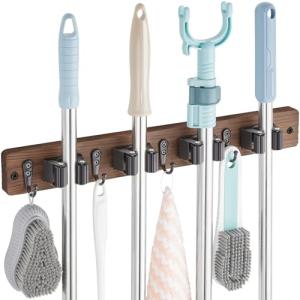
Mechanical fatigue and material degradation can compromise the gripping power and stability of your wall mounts over time.
- Repeated insertion and removal of heavy tools can eventually lead to Cyclic Fatigue Failure; inspect the grip arms for hairline cracks and replace the unit if the return motion becomes sluggish.
- The rubberized components of the mount may undergo Elastomer Hardening; use a dedicated rubber conditioner or swap to silicone-based grips to maintain the friction necessary for smooth metal handles.
- Overloading the rack beyond its rated capacity often results in Overload Deformation; verify the weight of each tool and distribute heavier commercial mops toward the primary support studs.
- Frequent movement and vibration during tool retrieval can cause Joint Loosening; utilize toggle bolts or heavy-duty anchors instead of standard plastic plugs to ensure the mounting plate stays flush.
- The internal springs used in many tension mounts might experience Spring Elasticity Loss; check the tension regularly and consider models with adjustable spring rates for varying handle thicknesses.
- Poorly manufactured plastic housings are susceptible to Stress Cracking; choose glass-filled nylon or metal-reinforced housings when storing thick-handled industrial equipment.
- In garage environments, the protective layers on metal hooks may suffer from Coating Peeling; apply a thin layer of clear rust-inhibitor or wax to exposed steel to prevent oxidation in unconditioned spaces.
Environmental Stress Factors
The location of your installation plays a critical role in how quickly the materials age and lose their functional integrity.
- Installing organizers in laundry rooms exposes the hardware to High Humidity Acceleration; prioritize stainless steel hardware and ABS plastics to prevent corrosion and adhesive failure.
- When mounts are used in workshops, a significant Dust Load can coat the gripping rollers; wipe down the contact points monthly with a damp cloth to restore the necessary surface grip.
- Cleaning chemicals stored nearby may lead to Cleaner Compatibility Conflict; ensure the storage area is well-ventilated to prevent airborne VOCs from turning rubber grips gummy or brittle.
Key Components
Each part of a wall mount system is designed to balance ease of access with a reliable, gravity-defying hold.
- The Load Bearing Frame distributes the weight; look for continuous metal tracks or reinforced backplates for high-capacity setups.
- A high-quality Fastener is crucial; always match the screw length and anchor type to the specific wall substrate (drywall vs. masonry) for maximum pull-out resistance.
- The Spring Elastic Component provides automatic tension; stainless steel springs are preferred over high-carbon steel to prevent rust in damp closets.
- A durable Structural Housing prevents twisting; internal webbing or thicker wall sections indicate a unit designed for long-term mechanical stability.
- The Polymer Shell offers a wipe-clean surface; look for UV-stabilized materials if the mount will be exposed to sunlight in a garage or utility room.
Related Categories
If you are researching full-room storage setups, you may also want to review the failure expectations and maintenance requirements for these related devices:
- Organize your chemical sprays and sponges efficiently by installing Utility Wall Shelves directly above your mop station.
- For smaller scrubbing tools and handheld items, consider using Pegboard Tool Organizers to keep your workspace clear and categorized.
- Keep your floor care liquids and supplies mobile and ready for use with Pull-out Cleaning Caddies.
- For those with limited wall space, Over-the-door Organizers provide an alternative for storing lighter cleaning accessories and rags.