Maintenance & Troubleshooting
Preventative care for hanging organizers requires a quarterly inspection of hook alignment and fabric tension to stop minor metal fatigue from becoming a catastrophic structural collapse. Regularly re-distributing weight from lower tiers to the upper spine helps mitigate the "bowing" effect that permanently deforms vertical support rods.
Common Failure Modes
Even the most robust door-mounted systems can experience wear over time due to repetitive motion and weight distribution issues.
- Repeatedly slamming the door or catching the unit can lead to joint loosening; tighten all threaded fasteners every six months to eliminate rattling and structural sway.
- Overloading individual pockets or tiers often results in cyclic fatigue; rotate heavy items between different shelves to prevent the base material from reaching its plastic deformation limit.
- Exceeding the recommended weight limit frequently causes overload deformation; verify the manufacturer's total load capacity and use a luggage scale to ensure the contents remain within safety margins.
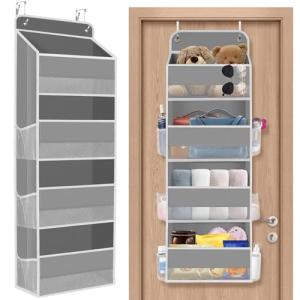
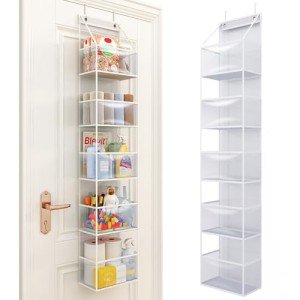
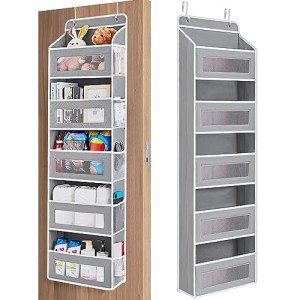
- Fabric-based organizers may suffer from stitch failure; avoid over-stuffing pockets beyond their physical volume to prevent seam separation under high lateral tension.
- The hooks that rest on the door frame are prone to structural warping; ensure the hook gauge matches your door thickness or add shims to prevent the metal from bending under uneven leverage.
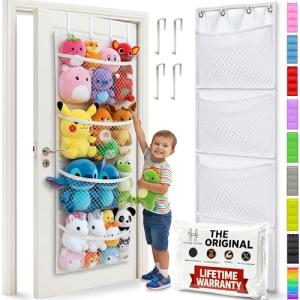
- When organizers use elasticated pockets, you might notice spring elasticity loss; limit the duration that oversized items stay in elastic sleeves to preserve the polymer's memory and grip.
- Constant contact between the organizer and the door surface can lead to surface scratching; apply adhesive felt pads to every point where the frame touches the door to protect the wood finish.
Environmental Stress Factors
The location of your door can significantly impact the longevity of the materials used in your organizer's construction.
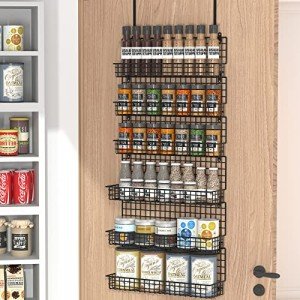
- In bathroom or laundry room settings, high humidity acceleration can degrade adhesives; opt for powder-coated steel or mesh over solid plastic to allow for maximum airflow and moisture evaporation.
- Organizers placed near sunny windows are susceptible to high UV exposure; choose light-colored fabrics or treated metals to reflect radiation and prevent the chemical breakdown of plastic components.
- Accumulated particles in high-traffic areas lead to dust load; vacuum fabric pockets monthly to prevent abrasive particles from cutting through fibers during normal movement.
Key Components
High-quality over-the-door systems rely on a combination of structural and protective elements to maintain their integrity.
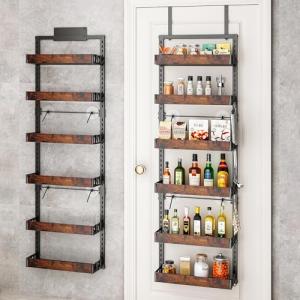
- The primary load bearing frame handles the vertical pull; inspect this spine for straightness to ensure weight is being transferred directly to the top hooks.
- Most units use a specialized fastener system to secure tiers; ensure these connections are flush to prevent the "seesaw" effect during door operation.
- The outer polymer shell provides the pocket structure; look for high-denier synthetics that offer superior tear resistance compared to standard vinyl.
- To protect the finish of your door, a high-quality surface coating or foam backing is essential for dampening vibration and preventing paint transfer.
- The over-the-door hooks act as the vital structural housing; prioritize wider hooks that distribute the load across a larger surface area of the door top.
- Modular systems often incorporate a sliding rail; periodically clear these tracks of debris to ensure smooth adjustment and secure locking of the shelves.
Related Categories
If you are researching full-room setups, you may also want to review the failure expectations for these related devices:
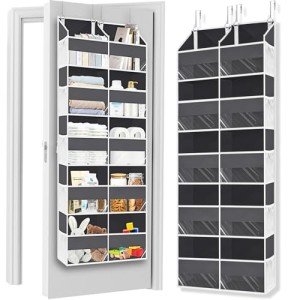
- For footwear-specific needs, over the door shoe holders provide specialized pockets that are specifically engineered for heel-to-toe weight distribution.
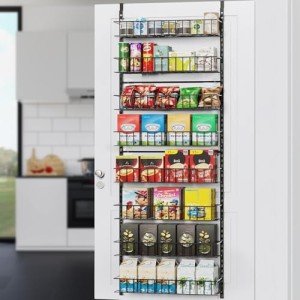
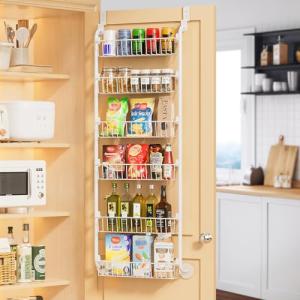
- In the kitchen, over the door snack racks utilize deeper baskets that help contain unstable or round pantry items.
- If you require a higher weight capacity than a door can safely support, wall mounted coat racks provide a permanent mechanical bond to wall studs for heavy outerwear.