Maintenance & Troubleshooting
Maintaining the mechanical grip of a shower mat requires the physical removal of biofilm from the suction cups at least once a week to prevent chemical delamination. Drying the mat vertically between uses is the most effective way to stall the oxidative stress that leads to material cracking.
Common Failure Modes
Even the most durable bathroom accessories face wear and tear over time due to constant water contact and physical pressure.
- To prevent mold growth, hang the mat to dry after every use, as stagnant water in the textured crevices provides a breeding ground for fungi.
- Address adhesive bond failure by cleaning the tub surface with isopropyl alcohol to remove invisible soap film that prevents suction cups from forming a vacuum.
- Counteract elastomer hardening by avoiding excessively high water temperatures, which accelerate the leaching of flexible agents from the rubber.
- Manage abrasive wear by inspecting the tread depth monthly; if the "peaks" of the non-slip texture feel smooth to the touch, the mat should be replaced.
- Monitor for plasticizer migration by checking for a sticky or oily residue on the mat, which indicates the polymer is breaking down and losing its structural integrity.
- Stop coating peeling by avoiding bleach-based cleaners that eat through the protective antimicrobial layers.
- Prevent stress cracking by rolling the mat for storage rather than folding it, which reduces the acute tension on the material’s flex points.
Environmental Stress Factors
The bathroom is a unique ecosystem where heat and moisture constantly test the limits of your household products.
- Mitigate high humidity acceleration by running an exhaust fan during and after your shower to lower the ambient moisture that degrades synthetic fibers.
- Remove hard water buildup with a mild vinegar soak every quarter to dissolve calcium deposits that clog drainage holes and reduce traction.
- Avoid a cleaner compatibility conflict by using pH-neutral soaps; avoid acidic solutions that can dissolve the anti-slip finishes.
- Address temperature extremes by allowing the mat to reach room temperature before rolling or unrolling it to prevent mechanical snaps in the material.
Key Components
Every mold-resistant mat is engineered with specific features to balance safety, comfort, and long-term durability.
- The polymer shell serves as the primary traction layer; look for high-density PVC or TPE for superior puncture and tear resistance.
- The active ingredient system often utilizes zinc pyrithione or silver ions embedded in the material to inhibit the growth of bacteria at the molecular level.
- A robust preservative system is critical for keeping the mat's chemical defenses active despite constant exposure to hot, running water.
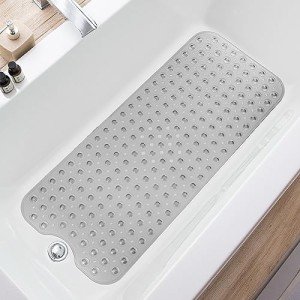
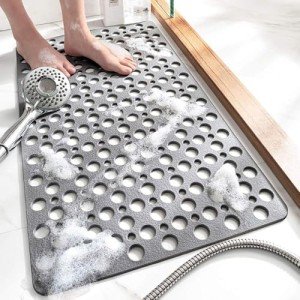
- The airflow ventilation system, consisting of underside channels and top-side drainage holes, is what prevents the mat from floating and losing grip.
- A specialized surface coating provides the microscopic friction necessary to maintain stability even when the shower floor is covered in slippery surfactants.
- In wood models, the structural housing must use rust-proof hardware and high-silica wood types like bamboo or teak to resist rot.
Related Categories
If you are researching full-room safety and organization, you may also want to review the failure expectations for these related devices: