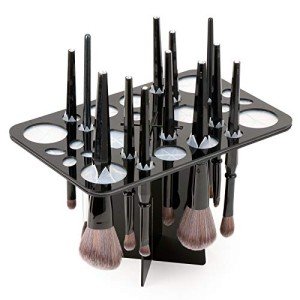
Maintenance & Troubleshooting
Regularly treating silicone grippers with a food-grade mineral oil can prevent the chemical drying that leads to grip failure and brush slippage. Routine inspection of the primary fasteners ensures that the vibration of daily use doesn't lead to a catastrophic structural collapse of the drying tree.
Common Failure Modes
Over time, mechanical and chemical stressors can compromise the integrity of your drying station, leading to instability or grip failure.
- To prevent Joint Loosening, minimize the frequency of complete disassembly and check that all friction-fit pieces are fully seated before loading brushes.
- Avoid Overload Deformation by distributing heavy, thick-handled brushes evenly around the center of gravity rather than clustering them on one side.
- Reduce the risk of Stress Cracking by using only mild soap and water for cleaning; avoid alcohol-based sanitizers which act as solvents on acrylic.
- Manage Abrasive Wear by clearing any grit or dried makeup from adjustable sliders to ensure the locking mechanisms don't grind down.
- Slow down Elastomer Hardening by keeping the rack away from direct heat sources and periodically massaging the silicone to maintain flexibility.
- Prevent Small Hardware Failure by applying a tiny drop of clear nail polish or thread locker to exposed screw heads to keep them from vibrating loose.
- Protect against Impact Fracture by placing the unit on a non-slip silicone mat to prevent it from sliding off the vanity surface during use.
Environmental Stress Factors
The bathroom environment presents unique challenges that can degrade the materials of your drying rack over time.
- To combat High Humidity, ensure the room is well-ventilated during the drying cycle to prevent moisture from dwelling in the hinge crevices.
- Mitigate High UV Exposure by storing the rack in a drawer or cabinet when not in use to stop the photo-degradation of clear plastic components.
- Resolve Cleaner Compatibility Conflict by rinsing the rack immediately if it is accidentally sprayed with hairspray or perfume, which can etch the surface finish.
- Minimize the Dust Load by covering the rack with a lint-free cloth between cleaning sessions to maintain a sanitary surface for your brushes.
Key Components
Each part of a drying rack is engineered to balance stability with the delicate task of holding brushes upside down.
- The Structural Housing should be inspected for hairline fractures, as this frame maintains the vertical alignment of the drying brushes.
- The Polymer Shell often contains the perforated grip system; ensure these openings remain free of residue to maximize friction against the brush handles.
- A robust Fastener System is critical for multi-tier racks; check these connection points monthly for any signs of backing out or stripping.
- The Hinge Pivot Assembly on travel models requires careful handling to avoid snapping the small pins that facilitate the folding action.
- The Surface Coating provides a hydrophobic barrier; avoid abrasive sponges that can strip this layer and leave the plastic vulnerable to staining.
Related Categories
If you are researching a full vanity organization system, you may also want to review the failure expectations for these related devices: