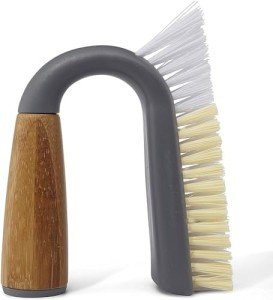
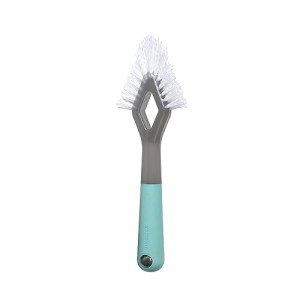
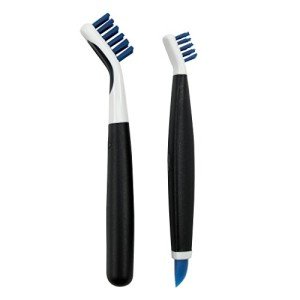
Maintenance & Troubleshooting
Prolonging the life of a grout brush requires managing the "memory" of the bristles; always store the brush hanging or bristles-up to prevent permanent splaying. Rinsing away acidic descalers immediately after use prevents the chemical softening of the polymer head, which is the leading cause of tuft loss.
Common Failure Modes
Heavy-duty scrubbing puts immense physical pressure on manual cleaning tools, leading to specific structural and material breakdowns over time.
- Repeated high-pressure scrubbing leads to abrasive wear; rotate the brush 180 degrees during use to ensure even tip degradation and maintain cleaning depth.
- Aggressive manual agitation can cause joint loosening; check for handle play regularly and reduce lateral "prying" motions to preserve the connection point.
- The intense mechanical force applied during deep cleaning may result in an impact fracture; avoid striking the brush head against porcelain fixtures to prevent catastrophic cracks in the brittle plastic.
- Over-flexing the brush during use leads to stress cracking; let the chemical dwell time do the work rather than applying excessive vertical force that bends the handle.
- Poorly dried tools often suffer from mold growth; shake out excess water and store the brush in a high-airflow area to prevent fungal colonization in the tuft holes.
- Exposure to harsh descaling chemicals can cause coating peeling; rinse rubberized grips with fresh water after using acid-based cleaners to stop the elastomer from breaking down.
- Cheaper plastics may experience UV embrittlement; store your cleaning kit in a dark cabinet to prevent the sun from leaching plasticizers and making the bristles snap.
Environmental Stress Factors
The harsh conditions of bathrooms and kitchens subject cleaning brushes to constant chemical and moisture-based degradation.
- Constant saturation in bathrooms creates high humidity acceleration; use a dedicated drying rack to ensure moisture isn't trapped between the bristles and the housing.
- Minerals left behind after cleaning can lead to hard water buildup; soak the brush head in a light vinegar solution monthly to dissolve calcium deposits that make bristles brittle.
- Frequent contact with acidic or alkaline solutions can cause cleaner compatibility conflict; verify that your brush is rated for the specific pH of your cleaner to prevent the plastic from melting or warping.
- In garage or utility settings, excessive dust load can clog the tufts; comb through the bristles with a fine-toothed tool to remove abrasive particulates that can scratch tile glazes.
Key Components
The efficiency of a grout brush depends on the synergy between its mechanical structure and its chemical-resistant materials.
- The rigid structural housing serves as the backbone; look for reinforced "I-beam" handle designs that resist bending under heavy palm pressure.
- High-quality brushes utilize a specialized polymer shell; polypropylene or nylon housings offer the best balance of impact resistance and chemical stability.
- The internal fastener system secures each bristle tuft; stainless steel staples are preferred over glue to prevent rust-jacking and bristle shedding.
- Many ergonomic models feature a textured upholstery fabric layer; keep this grip dry to maintain high-friction contact between your hand and the tool.
- The bristles themselves act as the active ingredient system; choose synthetic fibers with high elastic recovery to ensure the brush returns to its shape after use.
Related Categories
If you are researching deep-clean hardware for tiled spaces, you may also want to review the failure expectations for these related devices:
- For heavy mineral deposits that manual scrubbing cannot reach, investigate the thermal efficiency of steam mops.
- To eliminate organic staining and odors at the molecular level, review the chemical stability of mildew and mold cleaners.
- Keep your tools organized and prevent moisture-related degradation by utilizing specialized sink caddies.
- For larger floor areas where manual brushes are inefficient, consider the motor durability of electric scrubbers.