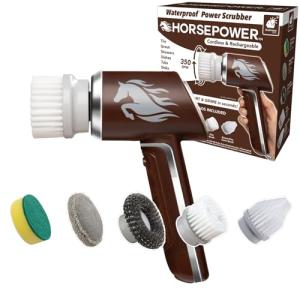
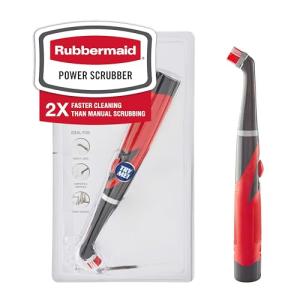
Maintenance & Troubleshooting
Preventing motor burnout requires monitoring the "pitch" of the gear transmission; a deepening hum often indicates a lack of internal lubrication or gear misalignment. Regularly drying the charging port and seal points after each use is the most effective way to stop the creep of internal corrosion.
Common Failure Modes
Electrical and mechanical stresses can eventually lead to performance degradation in high-RPM cleaning tools.
- Repeated charging cycles and heat buildup lead to battery fade; avoid "deep-discharging" the unit to 0% to preserve the life of the lithium cells.
- Applying excessive pressure causes gear tooth wear; let the RPMs do the work rather than leaning into the tool to prevent stripping the transmission.
- High-speed internals are susceptible to bearing wear rotational friction; listen for grinding noises and stop use immediately to prevent the shaft from seizing.
- Rapidly cycling the power under load accelerates switch contact wear; ensure the motor has come to a full stop before toggling power to reduce electrical arcing.
- Storage in a discharged state results in charger circuit stress; keep the device at roughly 50% charge when storing it for more than a month to maintain circuit stability.
- Abrasive scrubbing without water causes motor winding degradation; always use sufficient liquid to provide lubrication and help dissipate heat from the brush head.
Environmental Stress Factors
The conditions where you use and store your scrubber directly impact its long-term structural integrity.
- Storage in bathrooms leads to high humidity acceleration; store the unit in a dry linen closet to prevent steam from bypassing the silicone gaskets.
- Poorly filtered environments allow for dust load; wipe down the motor vents after dry-scrubbing tasks to ensure the internal cooling path remains clear.
- Regular cleaning often leads to hard water buildup; rinse the attachment spindle with distilled water to prevent mineral crust from locking the brush heads in place.
Key Components
A high-quality electric scrubber relies on a synergy of electrical and mechanical parts to deliver consistent torque.
- The motor assembly provides the raw power; higher-end brushless versions offer better heat management and longer service life.
- To protect internal electronics, the seal gasket system must be inspected for cracks or hardening that occur after exposure to harsh cleaning chemicals.
- The gear transmission reduces speed to increase torque; planetary gear sets are typically more durable for heavy-duty scrubbing than simple spur gears.
- Modern units utilize a lithium battery; avoid storing the unit on the charger indefinitely to prevent "trickle-charge" heat damage to the cells.
- The wiring harness must be properly insulated; check for any bulging in the handle which could indicate a pinched or overheating internal wire.
Related Categories
If you are researching deep-cleaning hardware, you may also want to review the failure expectations for these related categories:
- For larger surface areas that require sanitization, consider the mechanical longevity of steam mops.
- Organize your specialized tools and prevent moisture-related damage with pull out cleaning caddies.
- Maintain surface clarity after mechanical scrubbing by using shower glass and mirror sprays to reduce future mineral bonding.