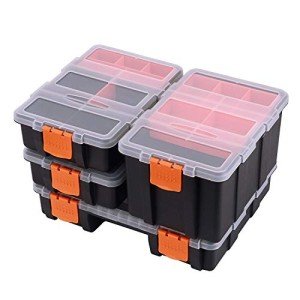
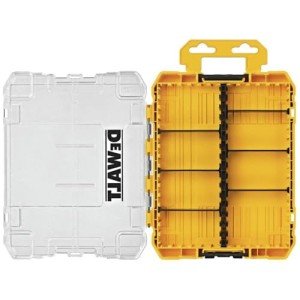
Maintenance & Troubleshooting
Periodically applying a dry-film lubricant to the hinge pins prevents the abrasive friction that leads to pivot-point snapping. Inspecting the lid-to-divider contact points for "stress whitening" can alert you to a failing latch before a catastrophic spill occurs during transport.
Common Failure Modes
Even the most rugged storage cases are subject to mechanical wear and material degradation over time, especially under heavy loads.
- Repeated opening and closing of lids can eventually lead to Hinge fatigue; prevent snapping by avoiding over-extension of the lid beyond its designed 180-degree stop.
- Overfilling individual sections often results in Stress cracking; keep hardware levels 5mm below the divider height to ensure the lid closes without applying vertical pressure to the walls.
- The heavy weight of metal hardware can cause Abrasive wear; line the bottom of high-use bins with a thin adhesive foam to prevent fasteners from grinding down the plastic floor.
- Dropping a loaded case frequently leads to Impact fracture; store cases on lower shelves to reduce potential fall energy and avoid handling in temperatures below freezing.
- Loose screws or bolts can cause Small hardware failure; regularly tighten any external fasteners and replace worn-out latch springs at the first sign of a loose fit.
- In humid environments, metal latches may experience Corrosion; apply a light coat of anti-corrosion spray to steel hardware to maintain smooth locking action.
Environmental Stress Factors
The environment where you store your parts case plays a critical role in maintaining the clarity and strength of the housing.
- Exposure to sunlight causes High UV exposure; keep cases in shaded cabinets to prevent clear lids from yellowing and becoming brittle.
- In workshops, a high Dust load can interfere with modularity; use compressed air to clear the divider tracks weekly so the inserts remain easy to adjust.
- Storing cases in uninsulated garages subjects them to Temperature extremes; allow the case to reach room temperature before opening if it has been stored in extreme cold to avoid cracking the shell.
- High moisture levels lead to High humidity acceleration; add a small silica desiccant pack to each case to protect the internal parts from oxidation.
Key Components
The efficiency of a compartment case relies on several specialized structural elements working together to protect your inventory.
- The Polymer shell provides the main impact defense; check for "crazing" or tiny surface cracks that suggest the polymer is reaching the end of its service life.
- To keep parts visible without opening the case, a high-clarity Glass panel or acrylic window is often used; clean only with non-ammonia based wipes to prevent surface clouding.
- The Fastener keeps the lid compressed; ensure the latches are fully engaged and not obstructed by debris to maintain a secure seal.
- A reinforced Structural housing enables stacking; always place the heaviest cases at the bottom of the stack to prevent the lower housings from bowing.
- The Hinge pivot assembly manages lid alignment; if the lid begins to shift laterally, inspect the pin for wear and realign it to prevent latch failure.
- Precision-engineered Seal gasket components block contaminants; check the gasket for flat spots or tears every six months to ensure it remains airtight.
Related Categories
If you are researching full-room setups, you may also want to review the failure expectations for these related devices: