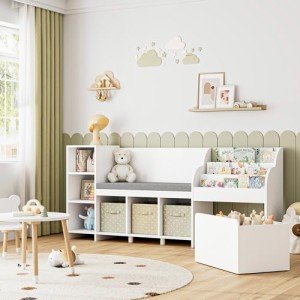
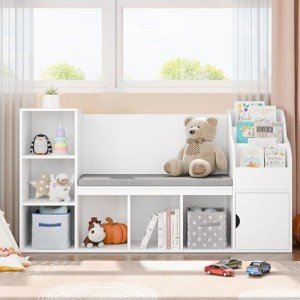
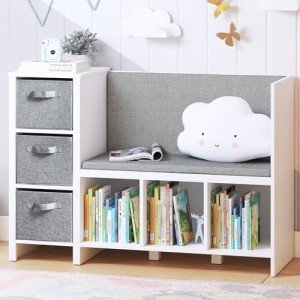
Maintenance & Troubleshooting
Regularly tightening the internal fasteners prevents the slight wobbles that eventually lead to catastrophic joint failure. Addressing minor stitch pulls early stops the migration of fabric tears and preserves the internal foam from environmental degradation.
Common Failure Modes
Furniture that serves dual purposes often experiences specific mechanical and material stresses over years of consistent household use.
- Repeated seating cycles on soft surfaces can eventually lead to Cushion Collapse; rotate seating positions frequently and choose high-density foam to maintain structural loft.
- Heavy weight loads on integrated shelving may result in permanent Structural Warping; distribute heavier hardcovers toward the outer vertical supports of the bench to minimize horizontal sag.
- The integrity of the unit depends on tight connections, as frequent movement often causes Joint Loosening; apply a drop of thread-locking fluid to assembly screws during initial setup to prevent backing out.
- In units with soft covers, heavy usage often leads to Stitch Failure; inspect seams quarterly and use a curved upholstery needle to reinforce any loose threads before they unravel.
- When users sit down with significant force, the sudden energy transfer can result in an Impact Fracture; ensure the bench is placed on a level surface to prevent uneven pressure on the lower support slats.
- Overfilling book compartments places immense pressure on fasteners, leading to Overload Deformation; strictly adhere to manufacturer weight capacities and avoid stacking books higher than the side panels.
Environmental Stress Factors
The placement and surrounding atmosphere of your book bench seat significantly dictate how well the materials age over time.
- Placing your bench near a bright window can lead to High UV Exposure; use UV-resistant fabric sprays or window tinting to prevent the breakdown of wood fibers and fabric pigments.
- In basements or humid climates, excess moisture in the air can trigger Mold Growth; maintain room humidity below 50% and ensure there is a small gap between the bench and the wall for airflow.
- Frequent use of harsh chemicals near your furniture can cause a Cleaner Compatibility Conflict; always use manufacturer-recommended upholstery cleaners and avoid over-saturating the wood during cleaning.
- In high-traffic family areas, a significant Dust Load can settle into crevices; vacuum the seams and shelf corners weekly to prevent abrasive dust from wearing down the finish.
Key Components
Each book bench is engineered with specific structural elements designed to balance the weight of a reader and a library.
- The core stability of the unit is provided by a Load Bearing Frame; check the alignment of the frame if the bench begins to creak during use.
- For maximum comfort during long reading sessions, the Upholstery Fabric Layer provides protection; use a fabric protector treatment to repel spills and reduce friction wear.
- The exterior of many modern benches features a durable Polymer Shell; clean with a damp microfiber cloth to avoid micro-scratches that dull the surface over time.
- Beneath the fabric, a dense Foam Core offers support; if the seat feels "bottomed out," check if the foam is replaceable before the frame sustains damage.
- To keep the unit cohesive and safe, a high-quality Fastener System is vital; periodically re-torque all visible bolts to compensate for natural wood expansion and contraction.
Related Categories
If you are researching full-room setups, you may also want to review the failure expectations for these related devices: