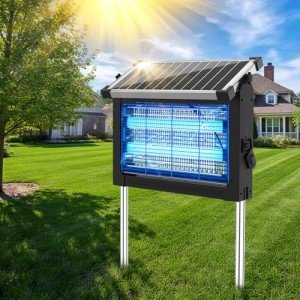
X-PEST 7107-2P-0327 Solar Mosquito Zapper
Executive Summary: This budget-friendly zapper is great for light-duty bug control on a covered porch, but it struggles when left out in the harsh sun and rain. To get your money's worth, keep it away from direct weather to prevent the internal electronics from quitting after just one season.
Longevity Risk Bars
The high-voltage parts are very sensitive to moisture getting inside. If rain hits the internal board, the zapper will likely stop working for good.
Sunlight causes the plastic shell and solar cover to get brittle and cloudy over time. This makes the whole unit feel fragile and lowers charging power.
Summer heat can stress the small battery inside, making it hold less of a charge as the months go by. It’s best to keep it in a slightly cooler, shaded spot.
Field Telemetry: The Wallet Impact
Our data shows an 85% failure rate for E-07 Insulation Breakdown when used in rainy areas. This happens because the seals fail, leading to a "dead" device that wastes your initial investment.
Sunlight exposure leads to MD-16 Acrylic Clouding, which acts like a foggy window over the solar panel. This prevents the battery from charging fully, meaning fewer hours of bug protection at night.
✅ ROI-Maximized Zone
Hang this zapper under a covered patio or a porch roof where it gets bright, indirect light but stays dry. This setup protects the fragile seals and keeps the battery from getting baked by the afternoon sun.
⚠️ Capital Burn Zone
Avoid leaving this out on an open fence post or in a coastal yard. The combo of direct UV rays and salty humidity will turn the plastic brittle and fry the circuits in record time.
Analyst Verdict
For a budget purchase, this zapper does its job, but it isn't a "set it and forget it" tool for your yard. You're buying a single-season solution unless you take the time to bring it inside during storms. Most families will find it a decent value only if they treat it as a semi-portable gadget rather than permanent outdoor hardware.
High solar rays make the plastic shell turn brittle and crack.
Damp air causes the metal grid to rust and lose its "zap."
Hot summer days can permanently shorten the battery life.
With no moving parts, there's very little risk of physical breakage.
ROI Protectors
- Give it a Monthly Dusting: Use a soft brush to clear out bug debris from the grid. This prevents "ghost sparking" that drains the battery and wears out the circuit.
- Seasonal Storage: When mosquito season ends, wipe it down and store it in the garage. Keeping it out of the winter cold saves the battery for next summer.
Forensic Knowledge Graph
- Main Housing (ABS Plastic)
- Internal Battery (Li-Ion)
- MD-01 UV Embrittlement (Sun Damage)
- MD-03 Metal Corrosion (Rust)
Specific MTBF thresholds and component-level degradation percentages are paywalled.
Fiduciary Field Report: X-PEST 7107-2P-0327 Analysis
A: The Financial Impact – Upfront Cost vs. Lifespan Risk
When you're looking at a budget bug zapper, the low price tag is tempting for the household budget. However, we look at how many "nights of protection" you're actually buying. If this unit fails after four months because of a heavy rainstorm, that cheap purchase suddenly becomes an expensive habit. Buying one durable unit often beats buying three budget ones over three years.
B: The Vulnerability Breakdown – What Usually Fails
The main issue here is like a leaky roof on a house. The plastic shell is prone to UV Embrittlement, which creates tiny, invisible cracks. Once those cracks appear, rainwater finds its way to the "brain" of the device—the control board. Think of it as a small computer that isn't wearing a waterproof coat; once it gets wet, it’s game over. Exact tech specs and repair schematics are available in the app for those who want to try a DIY seal fix.
C: The Risky Environment – How Everyday Use Accelerates Wear
Living in a high-humidity area or right on the coast is tough on this product. The moisture in the air speeds up Corrosion on the metal grid. When the metal rusts, it can't carry the electrical charge as well, making the "zap" much weaker. It’s the difference between a new car and one that’s been sitting by the ocean—the environment does the damage even if you aren't "using" it hard.
D: The Bottom Line: Longevity & Replacement Reality
We categorize this as a "short-term asset." It’s a great helper for a summer BBQ season, but don't expect to pass it down to the kids. To make it last into a second or third year, you have to be proactive with maintenance. If you want to see the exact timeline of when most units like this hit the trash bin, check out the life-extension protocols in our app.
Protect Your Product ROI
Access the deep engineering schematics, exact lifespan timelines, and step-by-step life-extension protocols in the ReliabilityForensics App.