Maintenance & Troubleshooting
Long-term suspension depends on maintaining consistent tension across all mounting hooks and regularly de-nesting toys to allow the mesh fibers to contract. Check wall anchors monthly for signs of crumbling plaster or loose screws to prevent a total detachment under load.
Common Failure Modes
Even the most resilient mesh can succumb to physical stresses over time, leading to unsightly sagging or total hardware failure.
- Repeated overstuffing of the net often leads to creep deformation; rotate toys every few weeks to allow different sections of the mesh to rest and recover their shape.
- The most common physical breakdown in netted storage is stitch failure; reinforce corner loops with a heavy-duty nylon thread at the first sign of a loose strand to prevent unravelling.
- When heavy toys are tossed into the mesh, the sudden force can cause impact fracture; place heavier items gently into the center of the net rather than throwing them from a distance.
- Prolonged tension on the suspension points can result in joint loosening; swap out basic plastic anchors for toggle bolts if you notice the hardware starting to pull away from the wall.
- The structural integrity of the net is compromised when textile fiber thinning occurs; avoid storing toys with sharp plastic edges that can abrade and saw through the individual mesh filaments.
- Small metal rings or hooks used in the suspension system may eventually suffer from small hardware failure; replace bent hooks with larger-gauge steel carabiners for a more secure and durable connection.
Environmental Stress Factors
The atmosphere of a child's bedroom or playroom can gradually degrade the materials used in hanging storage solutions.
- Nets placed near windows are highly susceptible to high UV exposure; use blackout curtains during peak sun hours to prevent the sun from turning the synthetic netting brittle.
- In basement playrooms, high humidity acceleration can weaken fibers; use a dehumidifier to keep the room below 50% humidity to preserve the tensile strength of the textile.
- Open-weave designs frequently act as filters, leading to dust load; shake out the net outdoors or use a vacuum brush attachment monthly to prevent grit from embedding in the weave.
Key Components
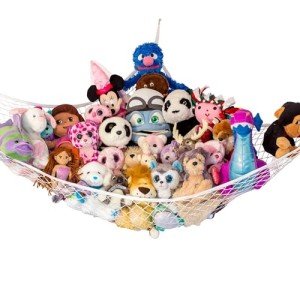
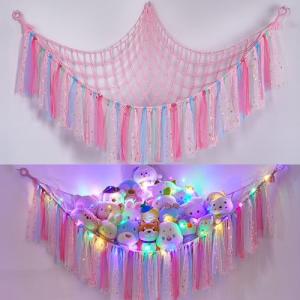
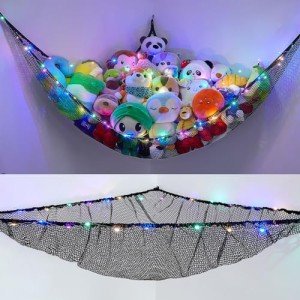
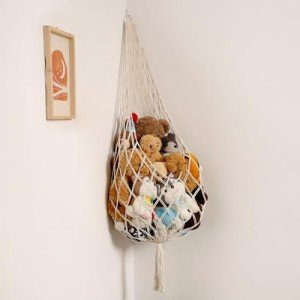
A high-quality toy hammock relies on several specialized components working together to safely suspend your child's plush collection.
- The primary support comes from the spring elastic component within the mesh; look for high-recovery elastomer blends that snap back after being stretched.
- Reliable installation is managed by the fastener system; ensure the hooks are deep enough to prevent the net from slipping off during active toy retrieval.
- The outer perimeter of the net utilizes upholstery fabric layer reinforcement; double-stitched borders are essential for distributing weight across the entire mesh surface.
- Modern versions may include a polymer shell coating; this protective layer helps the mesh resist staining and prevents the absorption of ambient household odors.
- The overall stability of the corner installation depends on the structural housing of the wall; always try to find a wall stud for at least one of the three mounting points for maximum security.
Related Categories
If you are researching alternative ways to manage a growing toy collection, you may also want to review the failure expectations for these related devices:
- For toys that aren't plush, stackable toy bins provide a rigid solution for items that require higher load-bearing support.
- In smaller nurseries, a hanging mesh bath toy organizer offers a similar breathable design engineered for the high-moisture stress of a bathroom.
- If you are designing a themed space, check the hardware durability of items in the boo tiful kids room collection to see how they integrate with wall-mounted storage.