Maintenance & Troubleshooting
Regularly inspecting the resin for surface glazing allows you to replace traps before the adhesive hardens completely. Proper vertical tensioning is essential to prevent the carrier paper from curling, which can lead to adhesive runoff and structural failure during high-heat periods.
Common Failure Modes
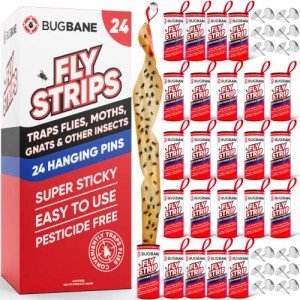
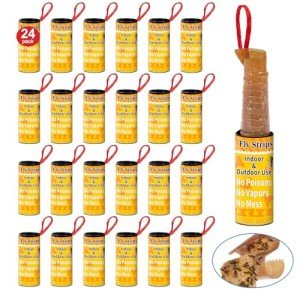
Fly strips are subject to physical and chemical degradation that can limit their sticky lifespan and overall trapping efficiency.
- To combat Solvent Evaporation Shift, avoid hanging strips in direct paths of forced-air heating which accelerates surface drying.
- Prevent Adhesive Bond Failure by ensuring the strip is not exposed to temperatures exceeding 100°F, which can liquefy the resin and cause it to drip.
- When Fragrance Degradation occurs, the trap may still be sticky but lose its "draw"; replace these units if insect interest drops off despite a clear adhesive surface.
- Stop Surface Scratching by anchoring the bottom of the strip to prevent it from oscillating against walls or furniture in breezy corridors.
- Counteract Hydrolysis Breakdown by keeping paper-based traps away from steam-heavy areas like stovetops or humid laundry rooms.
- Minimize Microbial Risk by disposing of strips once they reach 50% saturation, preventing the accumulation of moisture-retaining organic matter that can rot.
Environmental Stress Factors
External conditions play a significant role in how quickly a fly strip reaches its saturation point and requires replacement.
- A heavy Dust Load can be mitigated by placing traps in areas with minimal foot traffic or by using sheltered housing to keep the adhesive clean.
- Combat High Humidity Acceleration by choosing heavy-duty resin formulas specifically designed for outdoor or coastal climates to prevent the glue from running.
- Reduce High UV Exposure by positioning strips at least three feet away from window glass to protect the chemical stability of the attractants.
- During Temperature Extremes, move traps to interior walls where the adhesive is less likely to become brittle in the cold or overly fluid in the heat.
Key Components
Each element of a fly strip is engineered to balance shelf-life stability with high-performance insect capture.
- The Active Ingredient System must remain chemically stable; check the "use by" date to ensure pheromone potency hasn't lapsed.
- A durable Carrier Base prevents the trap from snapping under the weight of accumulated pests; look for reinforced paper or polymer backings.
- The Adhesive Bond is the primary point of failure; it should feel tacky to a light touch without leaving a heavy residue on your skin.
- An effective Preservative System prevents the trap itself from becoming a breeding ground for mold in damp environments.
- The Container Packaging should be airtight; if the tube feels oily or leaked, the internal adhesive has already begun to degrade.
Related Categories
If you are researching comprehensive pest management and household hygiene, you may also want to review the failure expectations for these related categories: