Maintenance & Troubleshooting
To preserve the mechanical action of internal pushers, you must periodically clear the sliding tracks of salt and seasoning debris that act as abrasives. Inspecting the mounting hardware for stress whitening every six months can prevent a catastrophic adhesive failure or crack propagation in the main housing.
Common Failure Modes
Even the most durable dispensers can encounter issues over time due to repeated mechanical use and material stress.
- To mitigate Hinge Fatigue, avoid hyperextending the lid beyond its natural stop-point to preserve the molecular integrity of the plastic pins.
- Prevent Overload Deformation by sticking to the manufacturer’s recommended bag count, ensuring the base doesn't bow and jam the dispensing gap.
- Stop Stress Cracking by using rubber washers between the screw head and the plastic housing to distribute the mounting pressure evenly.
- Preserve optical clarity by avoiding Surface Scratching; use only microfiber cloths and non-ammonia cleansers to wipe down the exterior.
- Address Spring Elasticity Loss by ensuring the pusher plate isn't left fully compressed for months at a time, which helps the spring maintain its tension.
- If you encounter Adhesive Bond Failure, clean the surface with isopropyl alcohol and replace the tape with a high-strength acrylic-based structural adhesive.
- Minimize Abrasive Wear by applying felt or silicone bumpers to the bottom of the unit to reduce friction against wire shelving.
Environmental Stress Factors
Where you place your dispenser significantly impacts its durability and the freshness of the snacks stored within.
- In areas of High Humidity, keep a desiccant pack near the dispenser to prevent moisture from degrading the polymer finish or making snack bags tacky.
- Shield units from UV Embrittlement by placing them in dark pantries or away from direct sunlight, which prevents the plastic from becoming brittle and yellow.
- Prevent Pet Hair Clogging by mounting dispensers at eye level or using a compressed air canister to blow out hair from the sliding tracks weekly.
- Avoid a Cleaner Compatibility Conflict by testing a small, hidden area of the plastic before using any industrial degreaser that could etch the surface.
Key Components
The efficiency of a snack bag dispenser relies on several integrated parts working together to facilitate easy access.
- The Structural Housing serves as the load-bearing skeleton; look for reinforced corners to ensure the unit stays square during installation.
- The Polymer Shell provides high-impact resistance; check for "BPA-free" or "Tritan" labels for superior chemical and heat resistance.
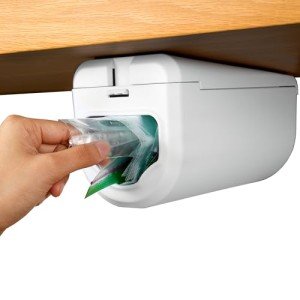
- A well-designed Dispensing Mechanism uses gravity or a gentle spring-tensioner to present the next bag without tearing the packaging.
- The Fastener hardware should be corrosion-resistant stainless steel to handle the high humidity common in kitchen environments.
- In airtight models, the Seal Gasket is the primary barrier; check that the silicone is flexible and fully seated in its groove.
- A Sliding Rail allows for effortless pantry access; look for ball-bearing tracks for the smoothest movement under heavy loads.
If you are researching full-pantry organization, you may also want to review the failure expectations for these related devices: