Maintenance & Troubleshooting
Regularly inspecting the radii of bin corners for white stress marks allows you to retire compromised units before they shatter during student use. Applying a specialized plastic-safe lubricant to sliding rail systems twice a year prevents the frictional heat that leads to premature polymer warping.
Common Failure Modes
Even the most durable classroom storage can succumb to the pressures of high-traffic educational environments and heavy material loads.
- Repeated stacking beyond recommended weight limits often leads to Overload Deformation; check for bowing in the side walls and redistribute heavy STEM kits to the bottom of the stack to restore alignment.
- Frequent dragging across rough classroom floors can cause significant Abrasive Wear; apply adhesive felt pads or nylon glides to the base to prevent the floor from thinning the plastic.
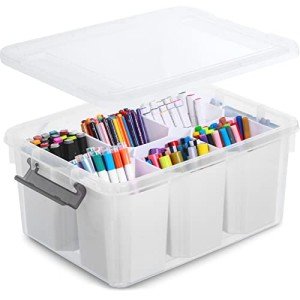
- Bins exposed to heavy art supplies may experience Stress Cracking; ensure weight is distributed evenly across the floor of the bin to reduce tension at the corner seams.
- The clarity of transparent organizers can be ruined by Surface Scratching; use only microfiber cloths for cleaning to prevent micro-abrasions that cloud the student's view of the contents.
- In bins featuring integrated handles, constant lifting can result in Cyclic Fatigue; instruct students to lift with both hands on the bin body rather than relying solely on the handle cutouts.
- If bins are dropped while fully loaded with heavy books, the sharp force often causes immediate Impact Fracture; opt for bins made of high-density polyethylene (HDPE) for superior energy absorption in drop zones.
- Low-quality plastic bins used for years may suffer from Plasticizer Migration; discard any bins that feel "sticky" or exude a chemical odor, as this indicates the polymer is becoming dangerously brittle.
Environmental Stress Factors
The classroom environment presents unique challenges that can accelerate the aging process of your storage solutions.
- Prolonged exposure to sunlight near classroom windows causes High UV Exposure; rotate your bin layout quarterly so that no single container receives constant direct solar radiation.
- Accumulated Dust Load in storage closets can act as an abrasive; wipe down the rims and nesting points before stacking to prevent grit from grinding into the plastic.
- Using harsh industrial disinfectants can lead to Cleaner Compatibility Conflict; always rinse bins with plain water after disinfecting to remove residual chemicals that can "craze" the plastic surface.
- In non-climate-controlled schools, Temperature Extremes during summer breaks can cause warping; store empty bins nested together during the off-season to help them retain their structural shape.
Key Components
High-quality school storage relies on specific engineering features to withstand the rigors of daily student interaction.
- The Polymer Shell serves as the primary body, providing the necessary flexibility and impact resistance for classroom safety.
- To support heavy reams of paper, the Load Bearing Frame must be reinforced at the base and upper rim.
- Many specialized mobile units rely on a Sliding Rail to allow students easy access to deep-seated storage bins.
- The Structural Housing of a bin determines how well it nests with others when empty to save space.
- Some premium bins utilize an Adhesive Bond to secure non-slip gaskets or decorative labels to the exterior.
- For lidded options, a robust Fastener ensures that supplies remain contained even if the bin is accidentally tipped over.
Related Categories
If you are researching full-room setups, you may also want to review the failure expectations for these related devices: