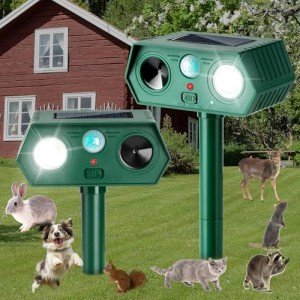
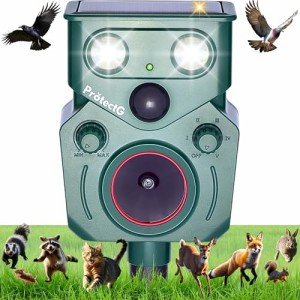
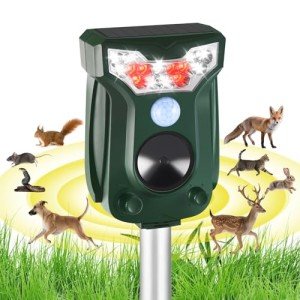
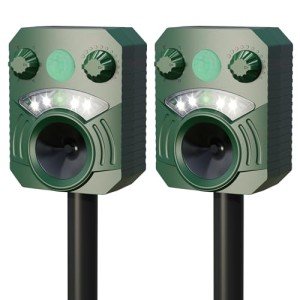
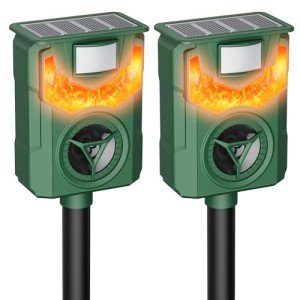
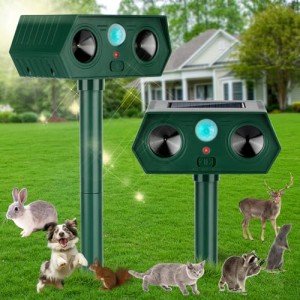
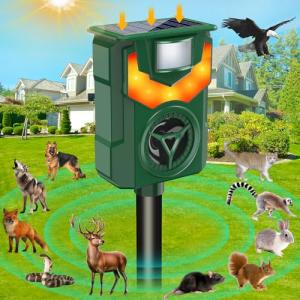
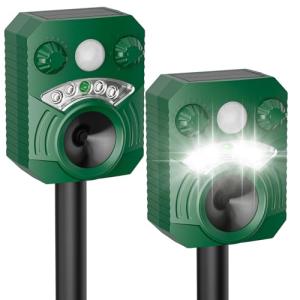
Maintenance & Troubleshooting
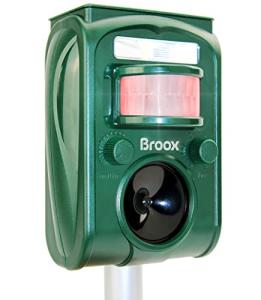
Maximizing the field life of an outdoor repeller requires preventing "wicking" moisture from reaching the internal control board through the sensor lens or battery compartment. Routine cleaning of the PIR Fresnel lens and checking the integrity of the polymer shell gaskets can prevent 90% of sudden system failures.
Common Failure Modes
Continuous exposure and repetitive activation can lead to several technical issues that diminish the efficacy of your outdoor repeller.
- To address sensor drift, periodically power-cycle the unit or move it to a shaded area to let the infrared detector reset its thermal baseline.
- Prevent contact oxidation by applying a small amount of dielectric grease to battery terminals and internal wire connectors to block moisture.
- Counteract UV embrittlement by applying a UV-rated plastic protectant to the casing to stop the polymer chains from breaking down and cracking.
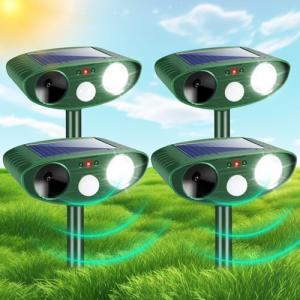
- Manage voltage sensitivity by ensuring solar-powered models receive at least 6 hours of direct sun to keep the internal capacitors at peak operating voltage.
- Combat battery fade by replacing internal NiMH or Lithium cells every 18 months, as high-heat environments accelerate the loss of chemical storage capacity.
- Stop corrosion on the PCB by ensuring the device is mounted at a slight downward angle, preventing water from pooling against the internal seals.
Environmental Stress Factors
The outdoor environment poses unique challenges that require your repeller to withstand harsh, fluctuating conditions daily.
- To mitigate outdoor weathering, inspect the rubber gaskets around the switches for signs of dry rot and replace them if the seal feels brittle.
- Reduce the dust load by wiping the sensor lens with a damp microfiber cloth monthly; even a thin layer of grit can cut the PIR detection range in half.
- Handle temperature extremes by checking internal screw tightness after seasonal shifts, as thermal expansion can loosen the mounts that keep the unit watertight.
Key Components
Each device relies on a sophisticated internal architecture to detect movement and emit deterrent frequencies effectively.
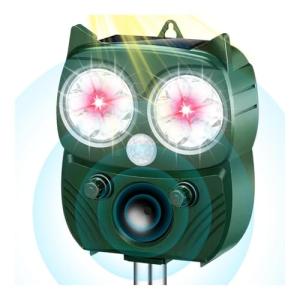
- The sensor system is the primary trigger; keep it clear of swaying vegetation to prevent false positives that deplete the power supply.
- A robust structural housing must be free of micro-cracks to protect the delicate ultrasonic transducer from humidity and soil acidity.
- The power supply regulates voltage spikes from solar panels; check for bulging capacitors if the device begins making clicking sounds.
- Reliability depends on the battery system; verify that the charge controller is correctly cutting off power at low voltage to prevent cell damage.
- Smart logic is managed by how electronic control boards manage smart storage; if frequency modulation fails, it is likely due to moisture-induced shorts on the logic chip.
If you are researching full-yard pest management, you may also want to review the failure expectations and maintenance requirements for these related devices: