Maintenance & Troubleshooting
Preventing grit accumulation in the hinge points and zippers is the most effective way to stop mechanical seizure before it starts. Periodically applying a fabric-safe UV-protectant spray can also chemically "recharge" the tent's sun-blocking capabilities after heavy seasonal use.
Common Failure Modes
Continuous mechanical stress and sun exposure can lead to specific structural issues that affect the safety and portability of your play tent.
- Repeated folding cycles can eventually lead to cyclic fatigue failure; always follow the manufacturer's specific "figure-eight" folding pattern to avoid over-torquing the frame.
- Prolonged sun exposure results in UV embrittlement; store the tent in its carry bag when not in use to limit unnecessary solar radiation exposure.
- Fine mesh panels may experience stitch failure; avoid hanging heavy items from the interior frame to prevent tension-based seam separation.
- Plastic connectors are susceptible to impact fracture; ensure the tent is fully collapsed before sliding it into the bag to prevent forcing the hubs against the frame.
- Protective layers on the tent floor might suffer from coating peeling; use a separate ground tarp on abrasive surfaces like gravel to protect the waterproof barrier.
- Internal mechanisms can undergo spring elasticity loss; store the unit in a climate-controlled area to prevent metal fatigue caused by extreme cold.
- Zippers and tabs often succumb to small hardware failure; rinse zippers with fresh water after beach use to remove corrosive salt and abrasive sand.
Environmental Stress Factors
External conditions play a significant role in the degradation of outdoor play equipment and require careful monitoring.
- Extreme heat accelerates temperature extremes stress; avoid leaving the tent in a hot car trunk, which can warp the internal polymer frame supports.
- Abrasive salt exposure can corrode hardware; wipe down all metal components with a damp cloth after every trip to the coast.
- Storing a tent while damp will lead to mold growth; always air-dry the tent completely in a shaded area before long-term storage.
- The accumulation of fine grit creates a dust load; shake the tent out thoroughly to prevent dust from acting like sandpaper against the fabric when folded.
Key Components
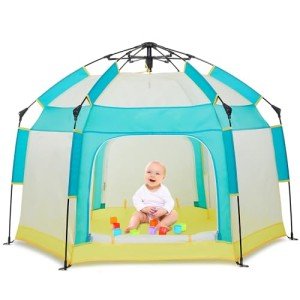
Each part of a UV-blocking tent is precision-engineered to provide a balance of lightweight portability and robust protection.
- The spring elastic component provides the necessary tension to hold the fabric taut and resist light wind loads.
- The structural integrity relies on a load bearing frame, which must be inspected for splinters or kinks that could lead to sudden failure.
- The outer shell uses a polymer shell specifically woven to block UV-A and UV-B rays through high-density thread counts.
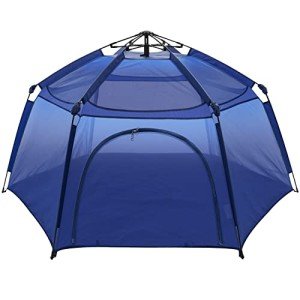
- An integrated airflow ventilation system uses strategically placed mesh to prevent heat-doming and maintain internal air quality.
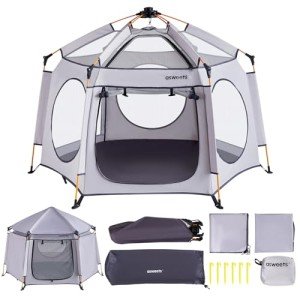
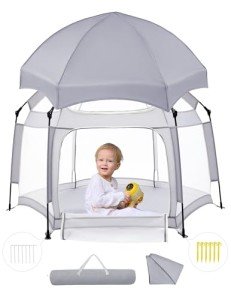
- The carry case and anchors utilize a fastener system that keeps the unit compact for transport and stable during use.
- The base often contains an insulation system designed to provide a thermal break between the child and the hot or cold ground.
Related Categories
If you are researching full-day outdoor setups, you may also want to review the maintenance and failure expectations for these related categories: