Maintenance & Troubleshooting
To prevent guide rails from seizing, users must perform a monthly "clear-track" cleaning to remove micro-particulate flour buildup that acts as an abrasive in sliding mechanisms. Periodic application of food-grade mineral oil is the only effective way to stabilize organic fibers against the structural warping caused by stovetop steam.
Common Failure Modes
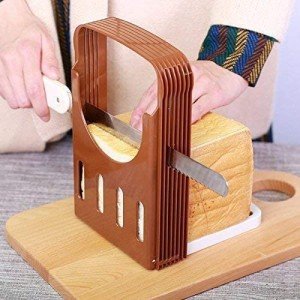
Over time, the repetitive mechanical motion and pressure of slicing can lead to specific structural and functional issues within your station.
- Repeated use of the guide rails often results in abrasive wear; use a soft-bristled brush to clear crumbs from the tracks after every use to prevent gritty friction.
- The high-pressure contact of sharp blades against the base can cause surface scratching; rotate the cutting orientation frequently to distribute blade impact across a wider surface area.
- Excessive force during the slicing of dense, heavy loaves may lead to overload deformation; let the knife’s serrations do the work rather than applying excessive vertical pressure that can bend internal supports.
- Wooden components that are frequently washed and dried improperly are susceptible to structural warping; never submerge the station in water and always dry it in an upright position to ensure even airflow.
- Small screws and tensioners may eventually experience joint loosening; check the tightness of all fasteners monthly to ensure the slicing guides remain rigid and safe.
- In humid kitchen environments, metal fasteners without proper coatings may suffer from corrosion; wipe down any exposed hardware with a dry cloth if the unit is kept near a boiling stovetop.
- Frequent adjustment of the slicing thickness can eventually lead to sliding track wear; apply a thin layer of beeswax to the tracks to maintain a smooth, low-friction adjustment glide.
- If the unit is dropped or struck by heavy cookware, it may experience an impact fracture; inspect the primary load-bearing corners for hairline cracks before each use to ensure structural integrity.
Environmental Stress Factors
The kitchen environment presents unique challenges that can degrade the materials and performance of your slicing equipment.
- Exposure to steam and boiling water creates high humidity acceleration; store the station in a cool, dry pantry cabinet rather than on the counter directly next to the range.
- The accumulation of fine flour particles and crumbs creates a significant dust load; use compressed air or a vacuum attachment to pull debris out of the hinge and pivot assemblies.
- Using harsh industrial degreasers can lead to a cleaner compatibility conflict; clean only with mild dish soap and a damp cloth to avoid dissolving the protective factory finish.
- Placing the station near ovens or stovetops subjects it to temperature extremes; maintain a minimum 24-inch distance from heat sources to prevent the glue bonds and wood fibers from drying out and cracking.
Key Components
A high-quality slicing station relies on several integrated components to ensure safety, stability, and repeatable results.
- The primary structural housing serves as the foundation; ensure the crumb tray is seated flush to prevent the unit from rocking during a cut.
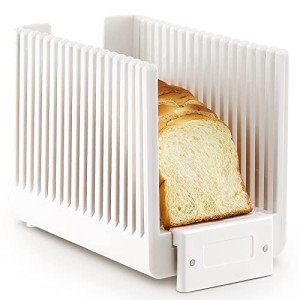
- Integrated sliding rail hardware allows for thickness adjustment; inspect the rail teeth for debris to ensure a positive lock in your desired position.
- Every stable station depends on a robust fastener system; if guides feel wobbly, check for recessed screws that may have backed out due to vibration.
- A durable load bearing frame prevents flexing; look for solid-core bases that provide the mass necessary to dampen the motion of the knife.
- Clear safety shields or thickness windows often utilize a polymer shell; avoid abrasive scouring pads on these surfaces to maintain crystal-clear visibility of the blade path.
- Units featuring foldable or collapsible designs rely on a hinge pivot assembly; test the tension of the hinge regularly to ensure the unit doesn't collapse while in use.
Related Categories
If you are researching full-room setups, you may also want to review the failure expectations for these related devices:
- To keep your workspace clear while slicing, consider reviewing the structural limits of tray stations for managing your cut bread.
- Safely store your specialized bread knives within reach by comparing the magnetic pull force of magnetic knife strips.
- Organize your countertop and keep butter or spreads nearby with our research on the rotational durability of lazy susans.
- For larger artisanal loaves, you might require the extra surface area and weight capacity of over the sink cutting boards.